
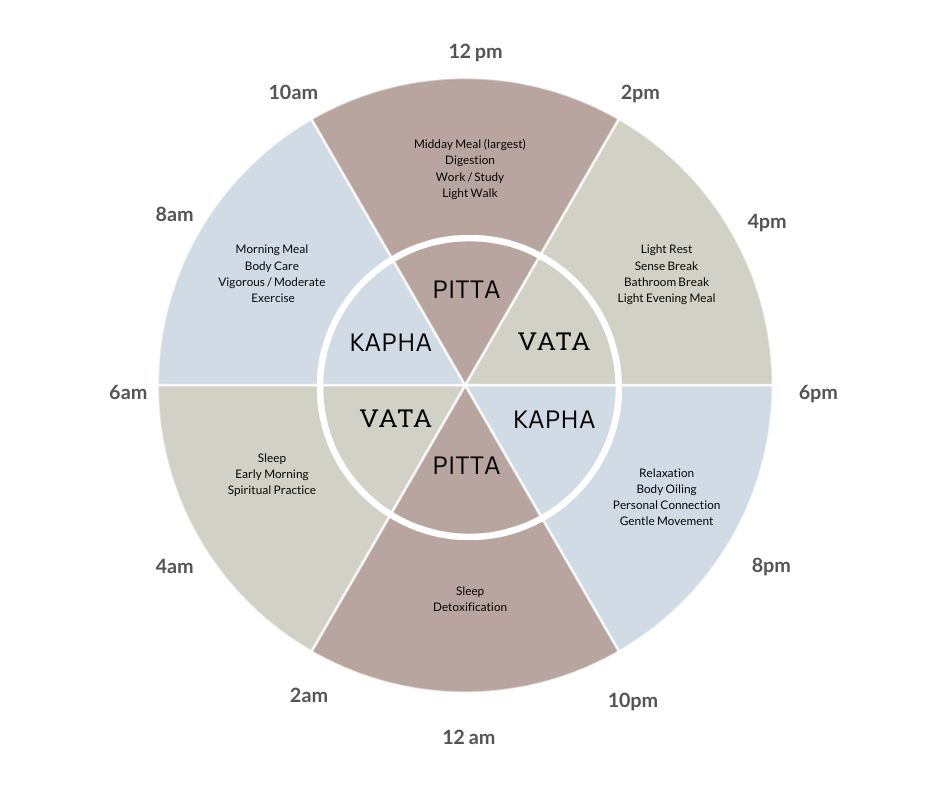
In the ancient science of Ayurveda, dinacharya—meaning “daily routine”—is a foundational practice that brings our bodies and minds into harmony with the rhythms of nature. At the core of Dinacharya is the Ayurvedic clock, a model that maps out the day according to the cyclical dominance of the three doshas: Vata, Pitta, and Kapha. Each dosha governs two distinct periods within a 24-hour day, and by aligning our daily habits with these energetic phases, we can experience greater balance, vitality, and mental clarity.
Remember, though, that exact times will vary based on where you live and your needs and lifestyle. For example, if the sun rises later where you live, or you are very depleted, I recommend sleeping longer and rising a little later to achieve balance.
Let’s look at each phase of the day and how we can create harmony using the Ayurvedic clock.
6:00 a.m. to 10:00 a.m. During this time, Kapha energy predominates. Kapha is heavy, slow, and steady—qualities that can make mornings feel sluggish if we don’t rise before this window. Waking up in the early morning taps into the lighter Vata energy and helps us start the day with clarity. Once Kapha sets in, it’s the ideal time for moderate to vigorous exercise, self-care rituals and a nourishing breakfast. The grounding qualities of Kapha support physical movement and preparation for the day ahead.
10:00 a.m. to 2:00 p.m. Pitta takes over. Pitta is fiery, focused, and transformative, which makes this window the best time for our most intense mental and physical work. It’s also the ideal time for our largest meal, as digestive fire (agni) is strongest when the sun is highest. Eating a substantial, nourishing lunch during this period supports digestion and energy levels for the remainder of the day.
2:00 p.m. to 6:00 p.m. Vata, which is light, mobile, and subtle, governs these hours. In the afternoon, Vata’s creative and expansive qualities make this a great time for brainstorming, light tasks, reading, or artistic endeavours. During these hours, many people are still working. In that case, you might take a short break and spend time in a natural environment, or do a short meditation or yoga nidra, where you close your eyes and relax for 10 minutes. Because Vata energy is more delicate, keeping meals light and nourishing in this window is also important.
6:00 p.m. to 10:00 p.m. Kapha returns. This is a time to slow down, engage in gentle movement like stretching or walking, and begin transitioning toward sleep. Reduce screens at least 1-2 hours before sleep, especially if you have trouble falling asleep or waking at night. This is also when Kapha’s stability supports relaxation, emotional connection, and routines that ease us into rest.
10:00 p.m. to 2:00 a.m. Pitta returns. This time, it is not for the digestion of food but for the assimilation and detoxification of information, thoughts, and experiences. During this time, the body performs vital cleansing and repair processes. Staying up late disrupts this natural cycle, so Ayurveda recommends going to bed by 10:00 p.m. to benefit from the healing energy of nighttime Pitta.
2:00 a.m. to 6:00 a.m. In the early morning, Vata’s subtlety supports spiritual practice, meditation, gentle breathwork, and introspection. Many spiritual traditions revere the time just before sunrise as especially sacred, and Ayurveda reflects this understanding. Rising early allows us to harness these uplifting energies and begin the day with purpose and calm.
Dinacharya isn’t about rigid scheduling—it’s about honouring the flow of energy that moves through the day. By structuring our routines around these rhythms, we support the body’s innate intelligence. Over time, this daily alignment cultivates resilience, promotes longevity, and nurtures a sense of peace and clarity.
Whether you want to improve digestion, sleep better, or feel more balanced in your mind and emotions, I recommend making changes slowly. Pick one or two changes, experiment and see what happens!