
Yoga Nidra, often referred to as “yogic sleep,” is a state of conscious deep relaxation. It is a powerful meditation technique that guides practitioners into a state between waking and sleeping, similar to the “hypnagogic” state. In modern scientific literature, non-sleep deep rest (NSDR) is a similar practice. During yoga nidra, one remains fully aware while experiencing profound relaxation and inner awareness.
Yoga nidra is particularly beneficial for achieving deep relaxation. It can help reduce stress and anxiety, improve sleep, and enhance concentration. In my work with patients, I find it can have a profound calming effect on people who often have a hard time meditating due to high stress, trauma or anxiety.
The following yoga nidra practice is particularly helpful for cooling and relaxing the body when there is excess heat (pitta) or a deficiency of yin. I hope you enjoy this practice to connect with the lunar tides within:
Every Yoga Nidra practice is different, but it typically involves several stages guided by a teacher:
- Find a quiet, comfortable place where you won’t be disturbed.
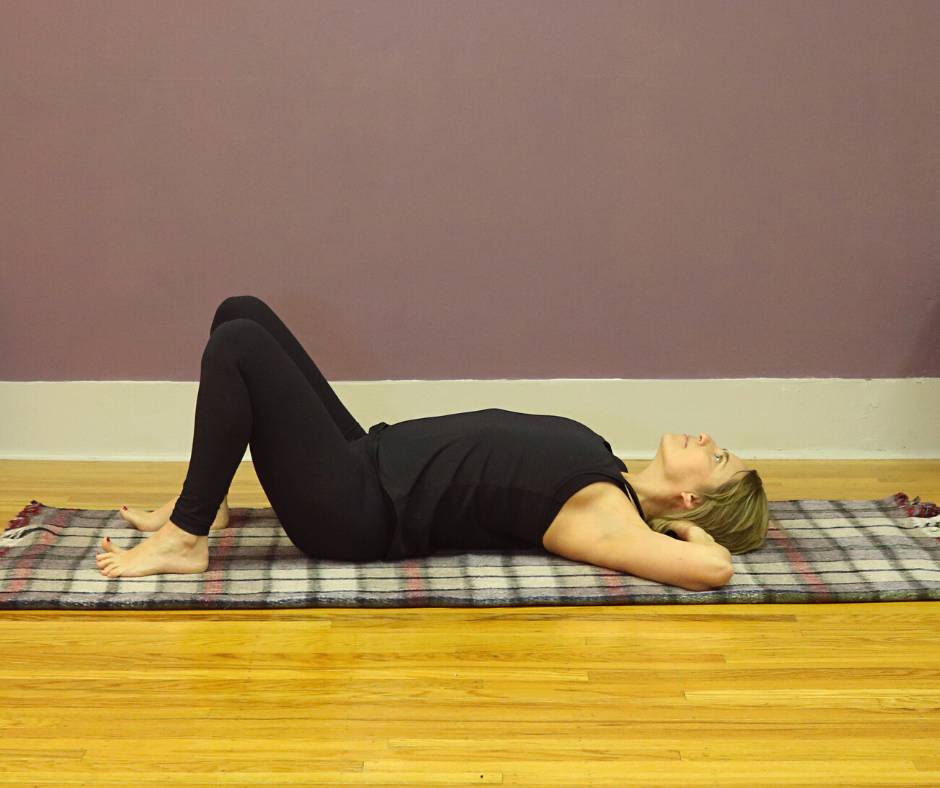
- Lie down on your back in Savasana (Corpse Pose) with your legs slightly apart and arms at your sides, palms facing up.
- Use a cushion under your head and knees if needed for comfort.
- Close your eyes and take a few deep breaths, allowing your body to relax.
- Set a positive intention or resolve for the practice, such as a simple positive statement like “I am at peace.”
- Guide your attention to various parts of your body sequentially. Visualizing that part relaxing.
- Use breath awareness to focus attention and encourage deeper relaxation.
- Explore feelings and sensations like pairs of opposite sensations – heaviness and lightness, heat and cold.
- Use visualization to enhance the practice further.
- Repeat your intention with awareness and feeling.
- Return to Wakefulness
Regular practice of yoga nidra can significantly improve your mental and physical well-being. Make sure to create a calm environment and allow ample time to experience the full benefits of this practice.