In Taoism and Traditional Chinese Medicine (TCM), the Spleen’s power is vital for digestive health and overall energy. In TCM, the Spleen is considered much more than an immune system organ. Along with the stomach, it’s primarily responsible for digestion and assimilation, making it a key component when working with fatigue and weak digestive capacity. If you’re feeling lacklustre, sluggish, or bloated, it’s time to take care of your Spleen Qi!
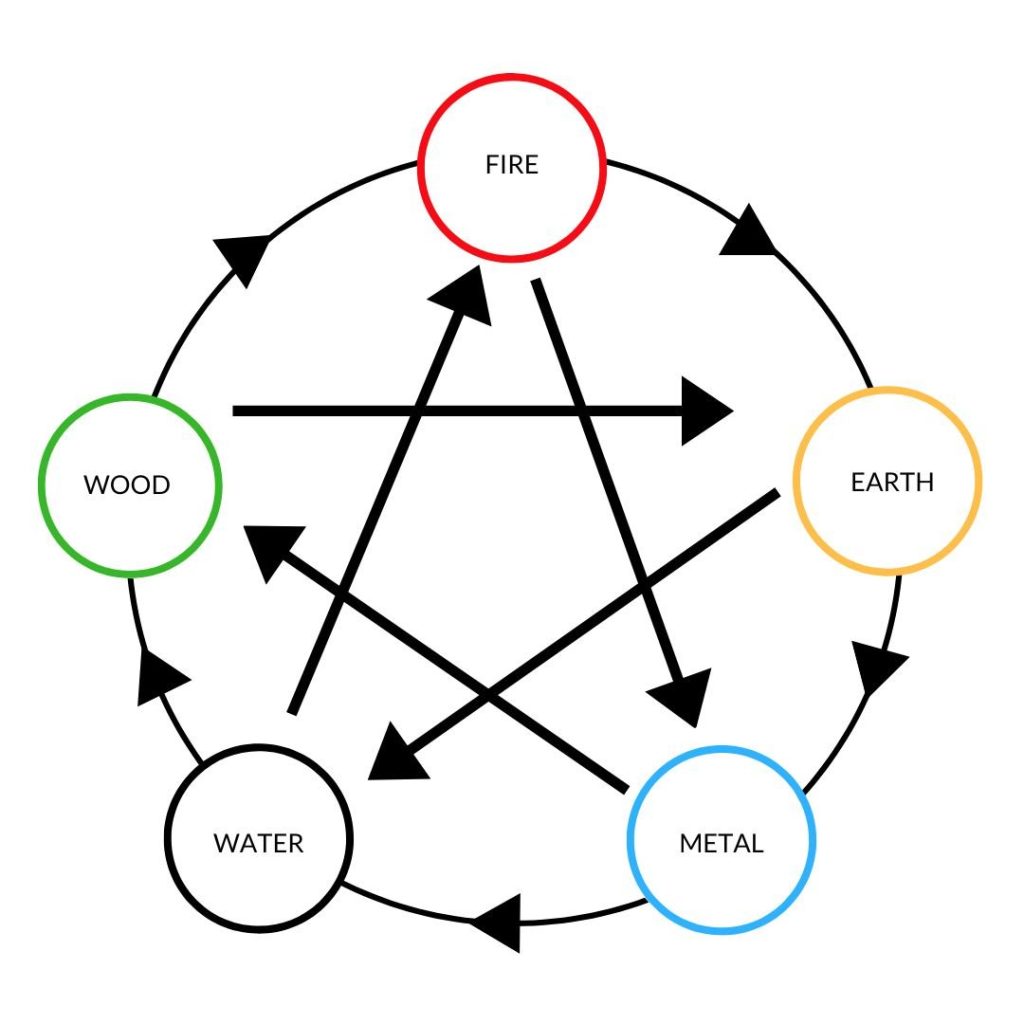
The transition periods between seasons are especially crucial for Spleen Qi health. This is because the Spleen is related to the earth element. You may recall that Chinese medicine has five elements – water, wood, fire, earth, and metal. Each of these elements represents a set of characteristics, and together they encompass all energies and phenomena in the universe.
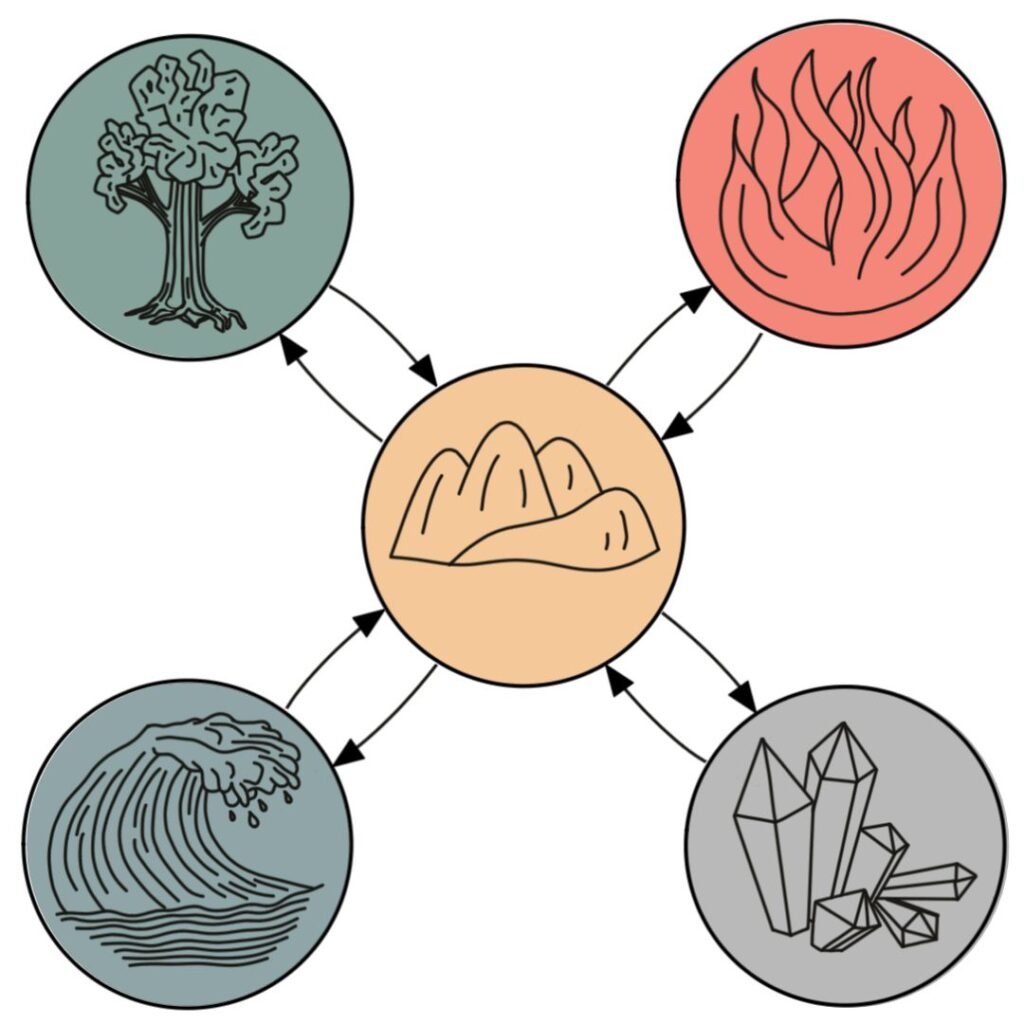
In the cycle of the five elements, the earth element occurs in late summer, after the summer and fire element and before the fall and metal element. However, the earth element phase can also occur between elements and seasons. Earth acts as a kind of centre—a brief place of balance that occurs during the transition between the elements and seasons (see images below).
So why is the Spleen so important?
Whether you’re transitioning between seasons or you’re in late summer, working with the earth element, digestion, and Spleen Qi is always a good idea. Holistic systems of health, such as Chinese Medicine and Ayurveda (the medical system of India and yoga), place digestion (and Spleen function in TCM) at the centre of health.
In TCM, the Spleen is responsible for “transformation and transportation.” It regulates fluid metabolism and the assimilation of nutrients from food. It also rules the mental “digestion” of experience. So if you tend to worry or overthink, chances are the Spleen is involved. Finally, the Spleen keeps organs in their place (protecting against prolapse) and determines the health of the muscles, flesh, four limbs, lips, and blood vessels. So, issues with any of these can also indicate that the Spleen needs some attention.
When Spleen Qi is weak, it can’t transform and transport food and fluids, leading to a condition called “dampness.” Dampness can also build up in late summer if you live in an area with frequent rain or high humidity.
When dampness accumulates, there can be many symptoms:
- Feeling heavy, tired, exhausted, sluggish
- Weakness, poor muscle tone
- Weight gain
- Excess mucus (runny nose, post-nasal drip, lung congestion, oozing skin)
- Poor appetite, nausea, lack of taste
- Gas, bloating, loose stools, undigested food in stools, acid reflux
- Lymphatic congestion
- Edema, fluid retention,
- Easy bruising
- Worry, overthinking, rumination
- Prolapse
Support your Spleen with Food and Herbal Medicine
In late summer, fruits and vegetables ripen, the harvest is gathered, and the bounty is celebrated. During late summer and each seasonal transition, meals should be simple and aim for balance. If you have weak digestion, most foods should be cooked. The naturally sweet flavour should be most prominent, as it is associated with the earth element and strengthens digestion. But remember – I’m talking about the naturally sweet flavour – it comes from whole foods like complex carbs and proteins – not processed sugar, which weakens digestion. To learn more about using food energetics, check out my TCM Food Therapy Online course.
FOODS TO AVOID: Excess raw foods, dairy, cold foods/beverages, excess sweet foods, and deep-fried foods. These slow digestive energy and encourage the formation of dampness.
FOODS TO USE: Well-cooked and easy-to-digest foods, naturally sweet and yellow foods that represent the centre (millet, yams, carrots, pumpkin, corn, squash, sweet potatoes), and small amounts of fermented foods.
Herbal Medicine to Support the Spleen
Below are my favourite herbs to use this time of year for Spleen Qi weakness and dampness. You can find the herbs at a Chinese Medicine herbal dispensary.
HERBAL FORMULA
- Si Jun Zi Tang (Four Gentlemen decoction)—This balanced formula can be taken as a decoction of raw herbs in pill or granule form. It contains four herbs aimed at strengthening the Spleen and tonifying overall Qi. This formula should not be used if there are signs of heat from deficiency or a combination of constipation, thirst, and irritability.
SINGLE HERBS
The herbs below are nicely cooked into a meal, such as soup or congee. Congee can be made with almost any grain cooked for an extended period with extra water (5-10 cups of water for every cup of grain). It is often supplemented with proteins, vegetables, spices, and medicinal herbs. This results in a well-cooked, easy-to-digest meal that does not cause dampness. Add the herbs directly to the grain while it is cooking, or make a decoction with the herbs and then add only the decoction water to the grain during cooking.
- Da Zao / Chinese Date (Jujube Fructus) – tonifies Qi and blood and primarily supports Spleen Qi and the digestive system. It also calms the spirit.
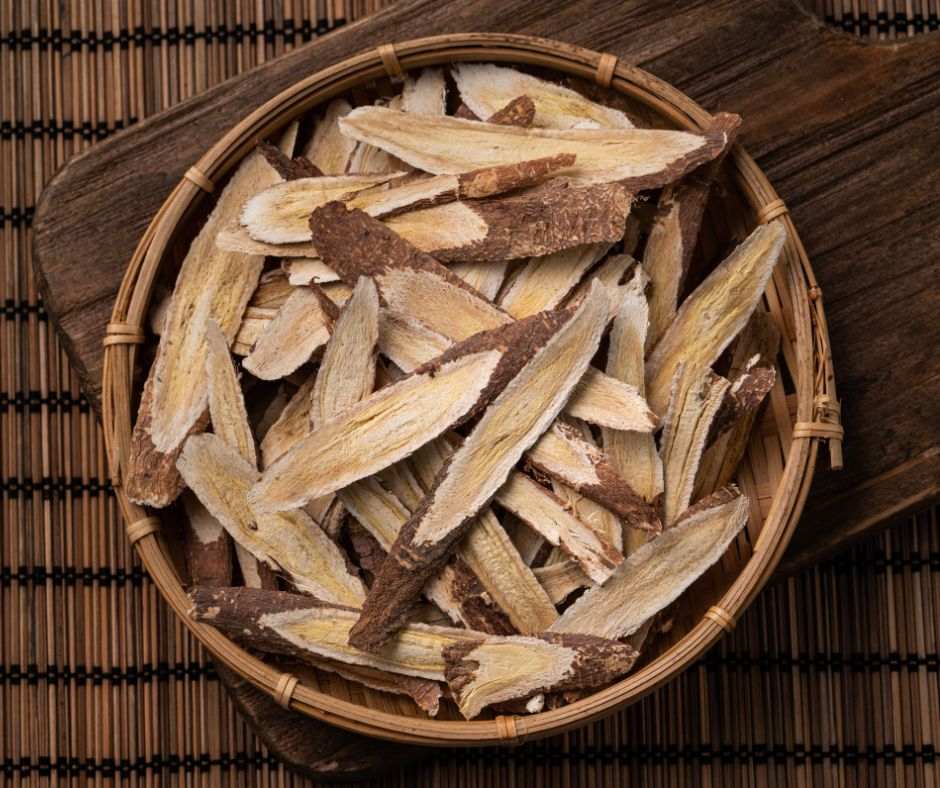
- Huang Qi / Astragalus (Astragali Radix) builds Qi and Yang and restores Spleen and Lung Qi if there is fatigue, loose stools, and lack of appetite. It also supports immunity and reduces edema.
- Gan Cao / Licorice Root (Glycyrrhizae Radix) is unique in that it is said to enter all twelve meridians. It supports Spleen Qi and moistens the Lungs. It is also a well-known herb for moderating and harmonizing—often used in formulas to mitigate the harsh properties of more potent herbs.
** These herbal suggestions are extremely safe. However, if you ever feel that a remedy is causing unwanted symptoms, please discontinue use and check with your practitioner.
I hope these suggestions serve you (and your Spleen!) this late summer and every seasonal transition.