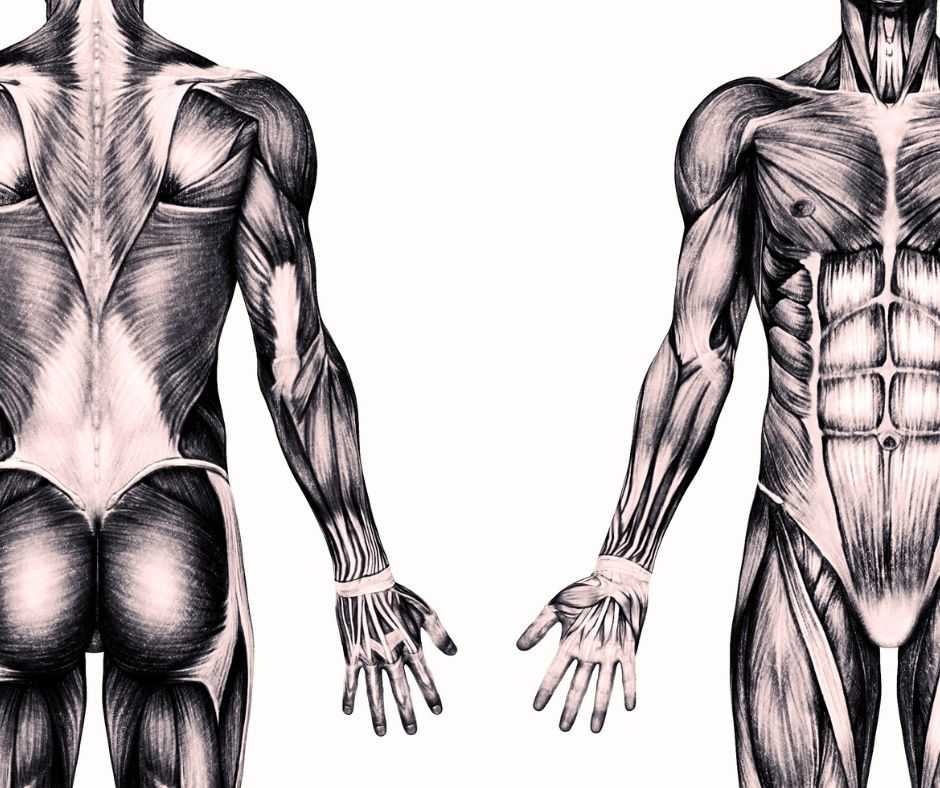
In Chinese Medicine, the Kidney and Urinary Bladder are paired.
When looking at organs through the lens of Chinese Medicine, it’s important to remember that it’s concerned with relationships, interactions, and functions more than with physical location. So whenever the organs are discussed in Chinese Medicine, what’s usually being referred to is an array of functional relationships.
Each primary organ has a corresponding meridian, or energetic channel. The meridians are where Qi is said to flow. This Qi nourishes the body and helps maintain its relative balance.
Physically, the Kidneys are located in the lower back, just behind the lower ribs. They filter the blood and regulate the fluids. The Bladder is located just behind the pubic bone. It stores and eliminates urine.
Energetically, the Kidneys are the root of all other yin and yang in the body. They are responsible for birth, growth, reproduction, and development. The Kidneys house the essence (Jing). This essence is easily taxed by stress and naturally declines with age. The Kidneys also help maintain fluid balance in the body.
In Chinese Medicine, the health of these organs is extremely important for maintaining deep energy and stamina. When the Kidneys are depleted, there can be reproductive issues, fatigue, early aging, or developmental problems.
Watch the video to learn about the location of the Kidney and Urinary Bladder meridians and some acupressure points you can use in your yin yoga or active yoga practice:
Location of the Kidney Meridian:
- Starts at the base of the foot
- Travels medially along the arch of the foot and circles the inner ankle
- Ascends the medial aspect of the leg up to the inguinal area
- An internal branch goes through the Kidney and Bladder
- The primary pathway continues and ascends the abdomen close to the midline
- Another internal pathway begins at the Kidney and travels through the Liver, diaphragm and the Lung
- Ascends the chest and ends at the clavicle
Location of the Bladder Meridian:
- Starts at the inner eye and ascends the forehead
- Wraps around the head and goes down the posterior hairline
- An internal branch descends and connects to the Kidney and Bladder
- From the base of the neck, the primary channel branches into two:
The Inner Bladder Line:
- Runs closer to the midline from the base of the neck to the sacrum
- Travels down the posterior aspect of the thigh to the back of the knee
The Outer Bladder Line:
- Runs down the midline from the posterior shoulder to the buttocks
- Descends the posterior aspect of the thigh and meets the inner bladder line
- Descends the posterior aspect of the leg and travels along the lateral aspect of the foot
- Ends at the outer corner of the little toe
Learn more about forward folding and the Bladder channel here
Acupressure Points for Yoga
During your yoga practice, some poses may compress these points, and others will release the compression. You can also place gentle pressure on these points before, during, or after practice.
Kidney 1 (YongQuan):
This point calms the spirit. It descends energy and is very grounding.
LOCATION: The location of this point can be found on the sole in the groove just under and in the middle of the pads of the big toe and second toe.
Urinary Bladder 13-28 – (Back Shu Points):
These points are associated with all the major internal organs and can be used to affect them directly. Generally speaking, these points are used to build energy or tonify the organ systems.
LOCATION: These points are located on the back of the body along either side of the spinal column.