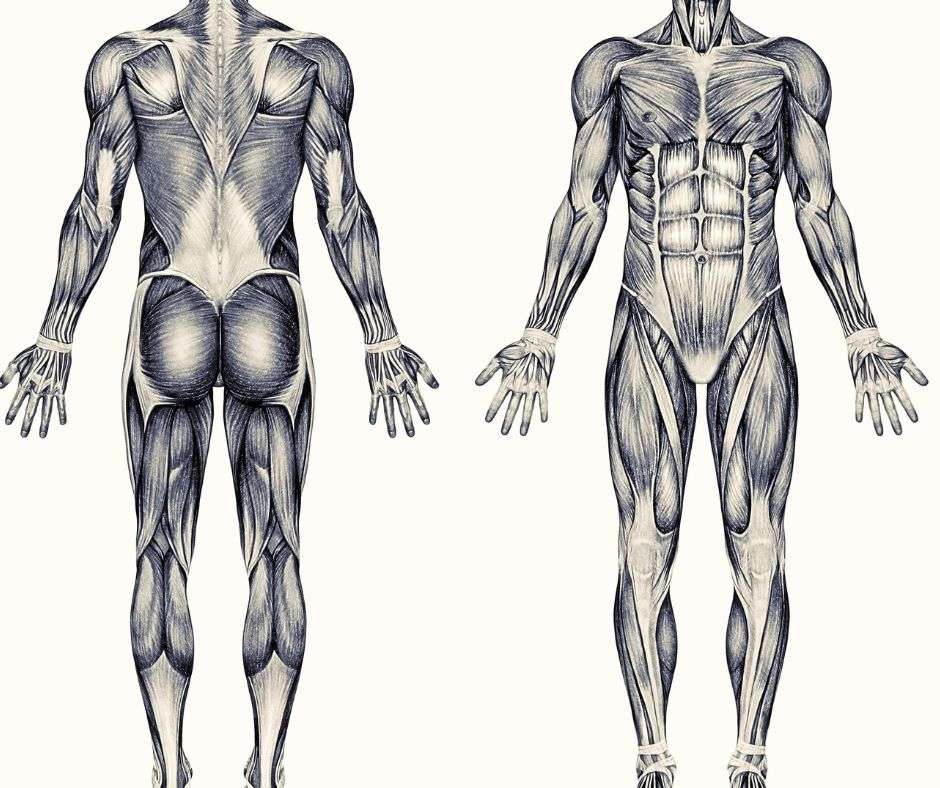
Yin yoga toe squat and yin yoga ankle stretch are great to open the bottom of the feet (the plantar fascia), they create more space in the toes, and they open the ankles.
These yin yoga poses also target all of the lower meridians that run through the feet. The meridians targeted are the Kidney, Urinary Bladder, Liver, Gallbladder, Spleen, and Stomach meridians.
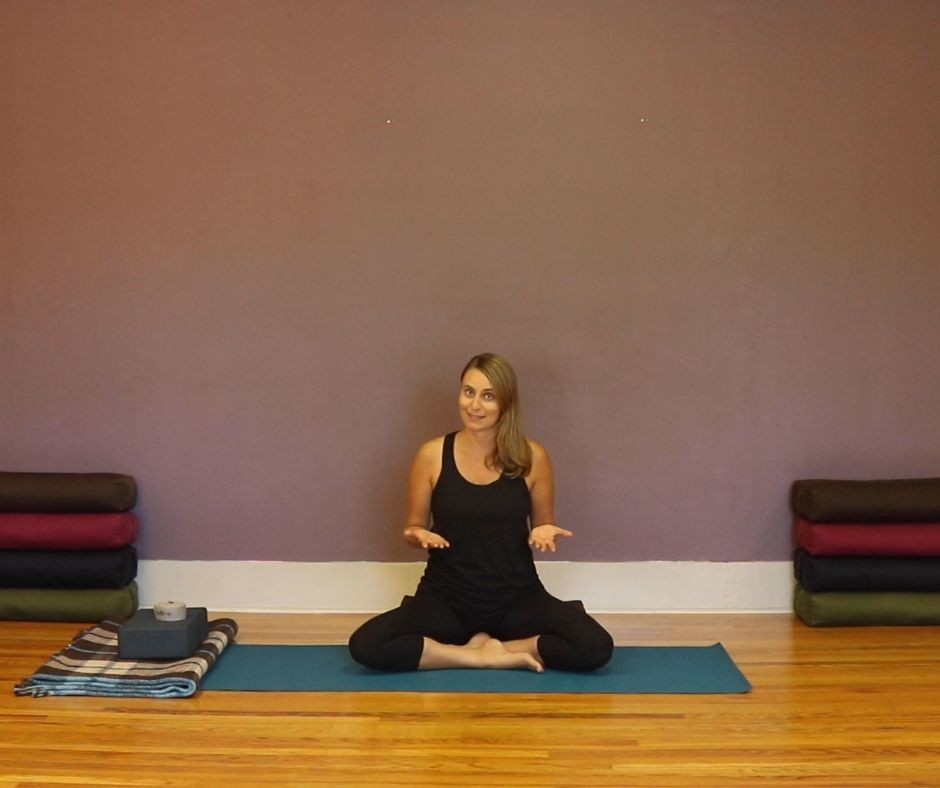
For the yin yoga toe squat pose, begin by kneeling on your mat. Tuck all ten toes under and sit back on your heels. Be sure to tuck even your little toe and lean on the balls of your feet.
This posture can be very difficult for yogis who have stiffness or limitations in their feet. If that’s true for you, hold the pose for a shorter amount of time and do several repetitions. Remember: load and pressure can be helpful for healing, building tissue resilience, and increasing circulation. But go slow and don’t overdo it!
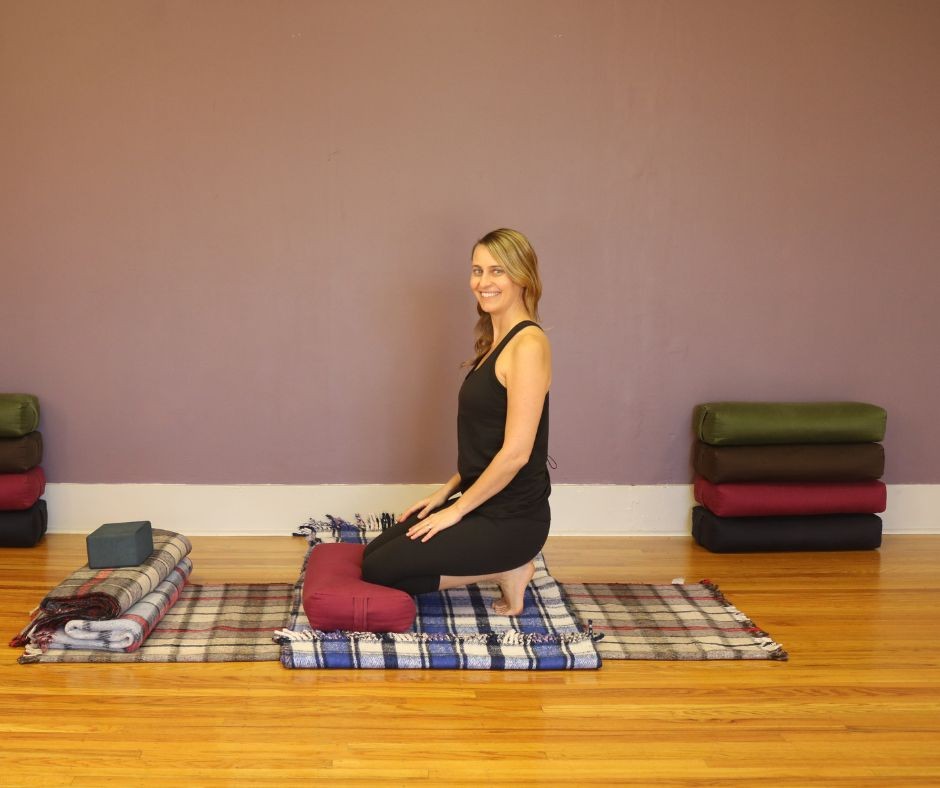
For the yin yoga ankle stretch, kneel on the floor with your toes untucked and your heels on the floor. Lean back, lengthening the top of the foot. As you lean back, lift your knees off the floor. Place your hands on your legs or on the floor. If you’re lifting your knees, you could also gently pull the tops of your knees toward you.
Yin Yoga Toe Squat and Yin Yoga Ankle Stretch modifications and variations
For both the ankle stretch and the toe squat, if you have knee limitations, you can wedge a folded blanket behind your knees or use a higher block under your sitting bones. You can also place a blanket under the kneecaps if it’s challenging to kneel on your mat.
For the toe squat, if the pressure on your toes is too great, you can keep your hands on the floor and gently rock back until you find a spot with some pressure but still manageable. You can also place a bolster under your knees or a block under your sitting bones to reduce the pressure.
For the ankle stretch, keep your hands on the floor if you’re not able to place them on your legs. Remember not to collapse the spine. Instead, think of lifting the spine tall and directing the chest forward.
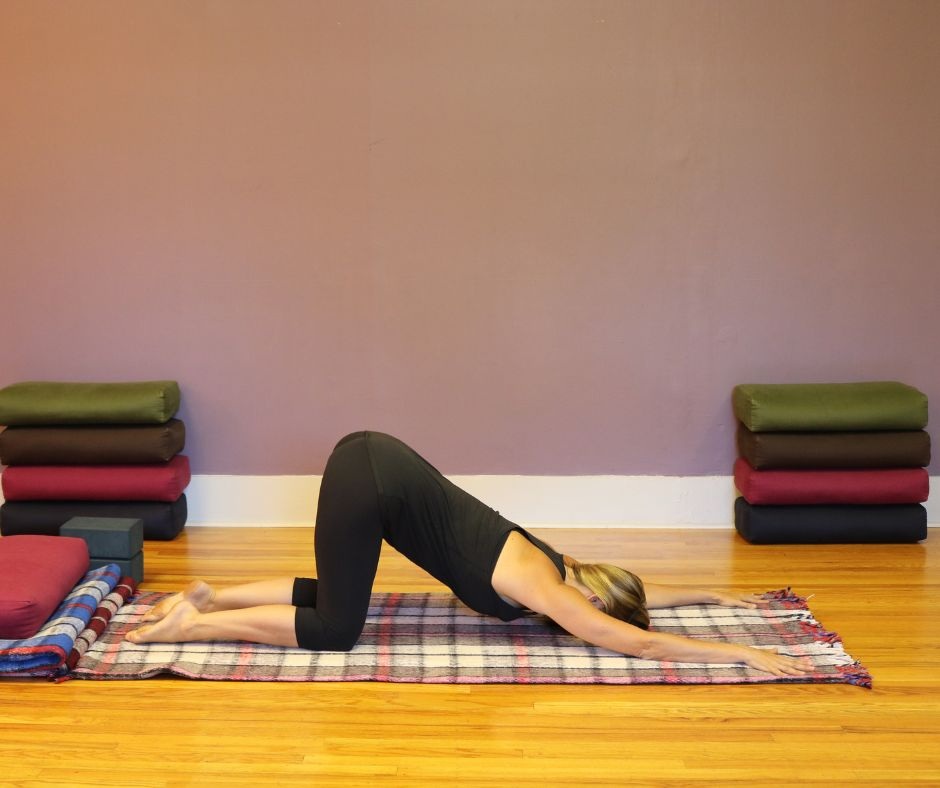
Ankle stretch and toe squat are good counterposes for each other, but after the toe squat, you could also use child’s pose or saddle pose. And after an ankle stretch, you could also do a squat.