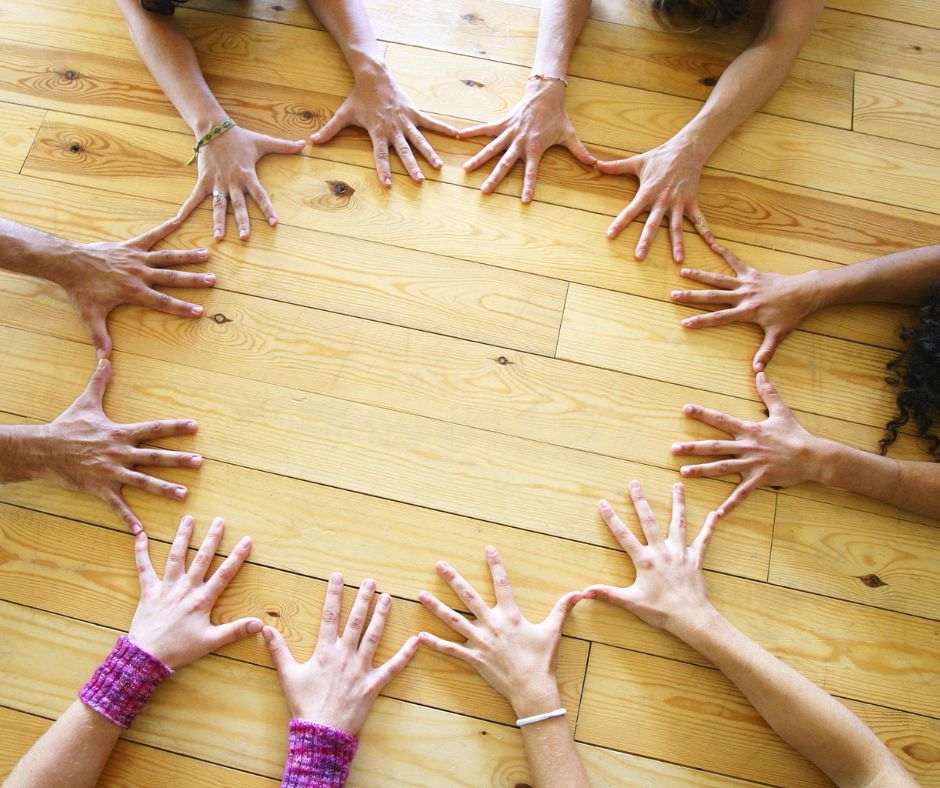
The current expression of yoga and its teachings is a veritable minefield of ethical quandaries. The cultural milieu in which modern yoga exists presents complex, unresolved issues for any teacher or practitioner who wishes to deepen their intimacy and integrity in the practice. Developing a sacred environment in which the relationship among the teacher, the teachings, and the student is grounded in a clear intention that includes transparency and recognition of potential difficulties is, I believe, of vast importance, especially if we are to truly benefit from this path’s depth of understanding and mastery.
"The practice of yoga is the commitment to become established in the state of freedom"
Yoga Sutra 1.13
Primarily, the larger framework in which the practice and teaching of yoga sit concerns me. After practicing and studying yoga for many years, I have had difficult questions related to the teacher-student dynamic, the business of yoga, and the challenge of offering the teachings and physical practice with authenticity and safety. These questions are uncomfortable, but I believe it is necessary to be aware of them in teaching. My role as an instructor is an opportunity to reflect on what the teachings of yoga are pointing to. I often ask myself, “How can I best embody the true teachings of yoga when holding space for others?”
My relationship with yoga is complicated. To say the least. Like an intimate relationship that has developed over time, my practice evolves and changes with every twist and turn in my developmental journey. Much of what I explore here has shown up, in one way or another, in my own teaching and practice. These are questions I don’t fully have solutions to, and many of the problems I highlight I am, or have been at some point, at least partially complicit in. Because yoga is a comprehensive system of philosophy, spiritual practice, and ethics, in addition to somatic practices, it continually requires me to refine my perception and examine how I operate as a teacher and student.
While I speak to the yoga community, I do it with a strong awareness that many teachers and studios ask themselves the hard questions and struggle each day to offer yoga that aligns with their highest values. I am also aware that instructors have varied reasons for teaching, and some may not share my ideas about the purpose of yoga. For example, more and more students step onto the mat to lose weight or get in shape and are not interested in the philosophy and spiritual practice yoga offers. Is this so wrong? Generally, when we have healthy bodies, we live happier lives. But is it yoga if it is divorced from the more profound practices of patience, ease and self-reflection?
"If we profess to be teaching Yoga, which is a science and art of living, we must practice that way of living ourselves. If we wish only to teach poses or postures, it would be better to call what we do by a name other than Yoga"
Donna Farhi
As a dedicated yoga practitioner and instructor, I see yoga as a continual practice of reflection. If the practice is engaged at this level, yoga provides space for the inner alchemy of true transformation. My physical practice on the mat is a microcosm of a larger picture off the mat, and at times, I am “practicing” more by focusing on inner inquiry than perfecting a forward fold. The reflection and inquiry that yoga requires often lead to more questions than answers. However, if the context of practice is respected, and students are guided in discovering their basic goodness, answers develop inwardly, which naturally leads to greater wisdom. I share my thoughts here as an entry point for discussion and an invitation for readers to turn to the questions raised within their practice of self-discovery, recognizing that only an individual can know what speaks true for them. Through this approach, I hope practitioners and students alike can reach a place of shared understanding, including an honest look at ethics.
It is rare to have a safe and stable container where we are supported in doing deep physical, emotional, and psychological work. And with the popularity of yoga, these opportunities are becoming more accessible to a larger subset of the population. At the same time, the superficial aspects of practice and the language of yoga are being absorbed by mainstream culture and manipulated for purposes other than their original intent.
Yoga today exists within the very particular context of Western capitalism and materialism. It is difficult for many teachers to offer yoga within the current model without teaching to prevailing expectations of charisma and appealing to the masses. Many yoga teachers inadvertently promote and participate in a “yoga star” culture. One in which “success” and mystique are just as (or more than) important as a meaningful relationship of exploration, witnessing and growth developed over time. Within the current model, I believe there is a threat of loss of accountability on the part of the teacher, which leads to all sorts of potentially damaging situations. At the very least, this leads to the watering down of teachings that truly offer profound possibilities for healing and expansion.
This isn’t to say that yoga can’t be a for-profit business. Teachers stand to benefit from a system that empowers them to be business owners and ethical. As a teacher who relies on my teaching income, I continually look for ways to authentically represent myself through my unique expression. If a teacher does the work necessary and has cultivated the requisite respect for the teachings and practice, “yoga as a business” has incredible potential. Many yoga teachers want greater respect within Western culture but are unwilling to hold themselves to higher professional standards. I assert that until individual yoga teachers start asking the hard questions about how to be a teacher in a way that aligns with the true teachings of yoga, we will continue to see all the trappings of modern Western yoga we are currently facing.
One of the most common areas of questionable ethics I have encountered is that of teachers teaching material they have not yet integrated or fully understood in their practice. In particular, this is very prevalent when offering mindfulness and meditation guidance. Teachers offer “advanced yoga” workshops after only a few years as teachers or practitioners. The culture of personality eclipses the value of practicing with a teacher operating from embodied understanding and eventually limits the benefits students can receive. Instead of producing highly skilled practitioners and teachers, the yoga world currently churns out many “actors” who do not teach from a place of authenticity and humility. Those who rely on pithy quotes, standard alignment cues and fancy postures due to their physical strength or flexibility, without having a solid foundation of personal practice, mentorship with senior teachers, and experience with the body and mind, move their students through classes that are missing the depth only experience and self-study can provide.
Internationally recognized senior teacher and yoga therapist Donna Farhi, in her book “Teaching Yoga,” names a kind of “cultural pathology” we face within the yoga world. This pathology tells us we can’t be beginners and that we must quickly become (or at least appear) experienced and knowledgeable without first going through an unavoidable learning period. This can lead to students who act as if they are entitled to arrive late, eat or text during class, push themselves to take postures beyond their skill level instead of using modifications, or “do their own thing” during formal class time. Ultimately, the path of yoga teaches us to look inwardly and listen to our own body’s messages. Still, for most, if not all, beginners, the guidance of a sensitive and attuned teacher is necessary to start. Without this support, our growth is inevitably limited, and the potential that the student-teacher relationship is meant to provide is lost. Additionally, this creates enormous limitations on proper mentorship and on cultivating a personal practice grounded in a nuanced, experienced understanding of the body and mind.
Unfortunately, the model of study that has become the norm within yoga circles is the drop-in class, in which the instructor is asked to teach a wide variety of body types, injuries, and skill levels. When a student chooses to enter teacher training, they can do so after practicing for a very short time. After relatively short teacher training, they are welcomed onto yoga studio schedules — especially if they have the “right” personality, marketing, or teaching style that students demand. After their initial study period, teachers often receive further training through a vast array of workshops. While exposure to new concepts and teachers is essential and inspiring, it will never replace the experience of working with a single teacher or group of teachers over an extended period.
Because yoga exists within a model that often values profit over the preservation of the teachings, inexperienced students’ demands often drown out senior teachers’ views and wishes. While offering another class that emphasizes physical prowess and diminishes the importance of rest may be popular, it is, in the long run, not serving the vast majority of students. It is hard for teachers and studios to separate the worth of their offerings from their students’ fondness and the more superficial preferences. Mainly when operating in a system of for-profit studios where class numbers are closely watched. But Farhi implores us to question whether what we are offering is relevant to our students and whether it guides them to listen to their inner authority and limitations. She uses the following question:
"Am I departing from the greater quest, which is to help the student to discover his true identity?"
Teachers are often under pressure to teach more advanced material to students. This often leads beginners to repeatedly practice challenging or poorly aligned asana (postures), resulting in strain and stress on the body. The issue of yoga injuries is a massive area of interest that has exploded recently within the yoga community and is beyond the scope of this article. Visit Matthew Remski’s blog, where he discusses the current model, which unfortunately leads to many injuries and his many conversations about dismantling it.
Yoga has been a place of depth, healing and support for me. I have been impacted by teachers who have brought forth undeveloped and fragile qualities within me for greater scrutiny with grace and skill. In contrast, teachers have also negatively contributed to my growth as a spiritual seeker, practitioner and teacher. As an instructor, it is always important to remember that a yoga teacher can potentially exist in the student’s mind in ways that are blind to the teacher’s foibles. Because of this, teachers must evaluate their relationships with students and their impressions on them, and remain very diligent when assessing and establishing professional and personal boundaries.
In my teaching career, I aim to authentically and humbly offer what is a part of my practice. I continually feel honoured to guide and support others in unfolding and self-discovery, and to be a part of many yoga circles that aim to serve their communities.
All of this leads to an awareness that yoga is an ever-expanding investigation into what it means to have this human experience and how to live it best, with heart and integrity. Eventually, through this process of questioning and practice, the division between teacher and student softens, and what speaks true to the student and what has been integrated becomes part of the student’s experience and practice. And so, in this way, it is possible for yogis to eventually honour their unique expressions together and share in the union that yoga offers while still respecting the deep roots of the teachings.