Solar Terms or Seasonal Points for Spring

Many earth-based wisdom systems recognize the need to participate with, rather than work against, the changing tides of the seasons. When we live in harmony with seasonal change, we foster greater well-being.

By observing the natural world, the ancient Chinese developed a calendar system with 24 seasonal points, based on the sun’s annual circular motion. Each period is approximately two weeks. You can think of these solar terms as mini-seasons.

Each solar term represents the unique weather pattern present at that time of year and is associated with specific traditions. Learn more about all of the solar terms here.

Solar terms or seasonal points reflect the climatic and environmental changes that occur as the seasons shift. Chinese Medicine (TCM) emphasizes the need to adapt our behaviour based on the external environment to maintain health and vitality and avoid disease. Therefore, we can use the solar terms as guideposts when harmonizing our diet and lifestyle choices to align with the natural world.
Solar Terms or Seasonal Points for Spring

In today’s post, we’ll explore the seasonal points associated with spring. Be sure to check out this post for general info on the seasonal points, and these for information on the solar terms of summerfall, and winter.

solar terms spring

Beginning of Spring- lì chūn – 立春  – Feb.4th – Feb.17th
The first seasonal point of the calendar marks the beginning of spring. This is an excellent time to make a fresh start. Even though we may still have some cold days ahead, spring is coming! This is when we feel an inner vitality returning after the cold, dark winter months.

solar terms spring

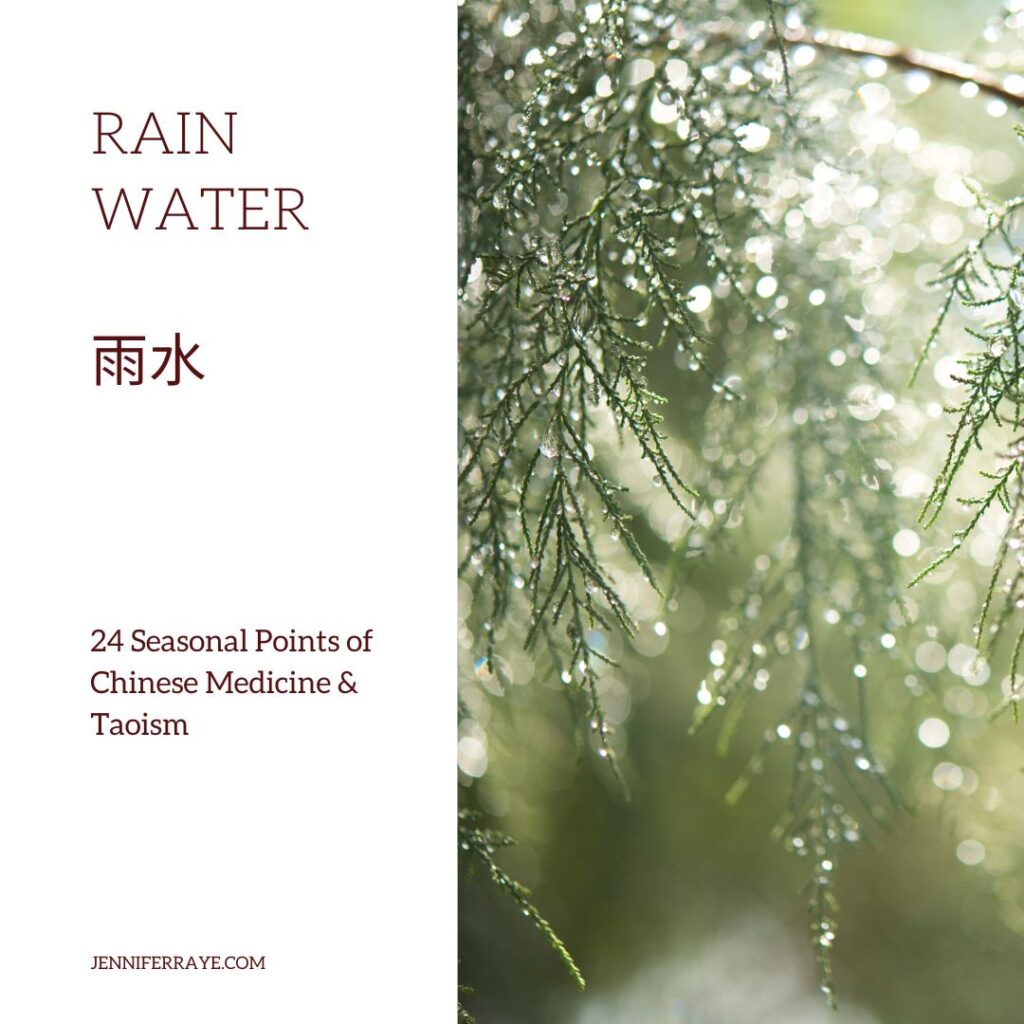
Rain Water – yǔ shuǐ – 雨水 – Feb.18th – Mar.4th
This solar term marks the time when water begins to flow. This may be in the form of rain, but it can also mean the thawing of waterways. All this melting animates the natural world, turning everything verdant again. Think of green shoots and buds emerging after winter. Make some space and clear the clutter. This is the season for renewal.

solar terms spring

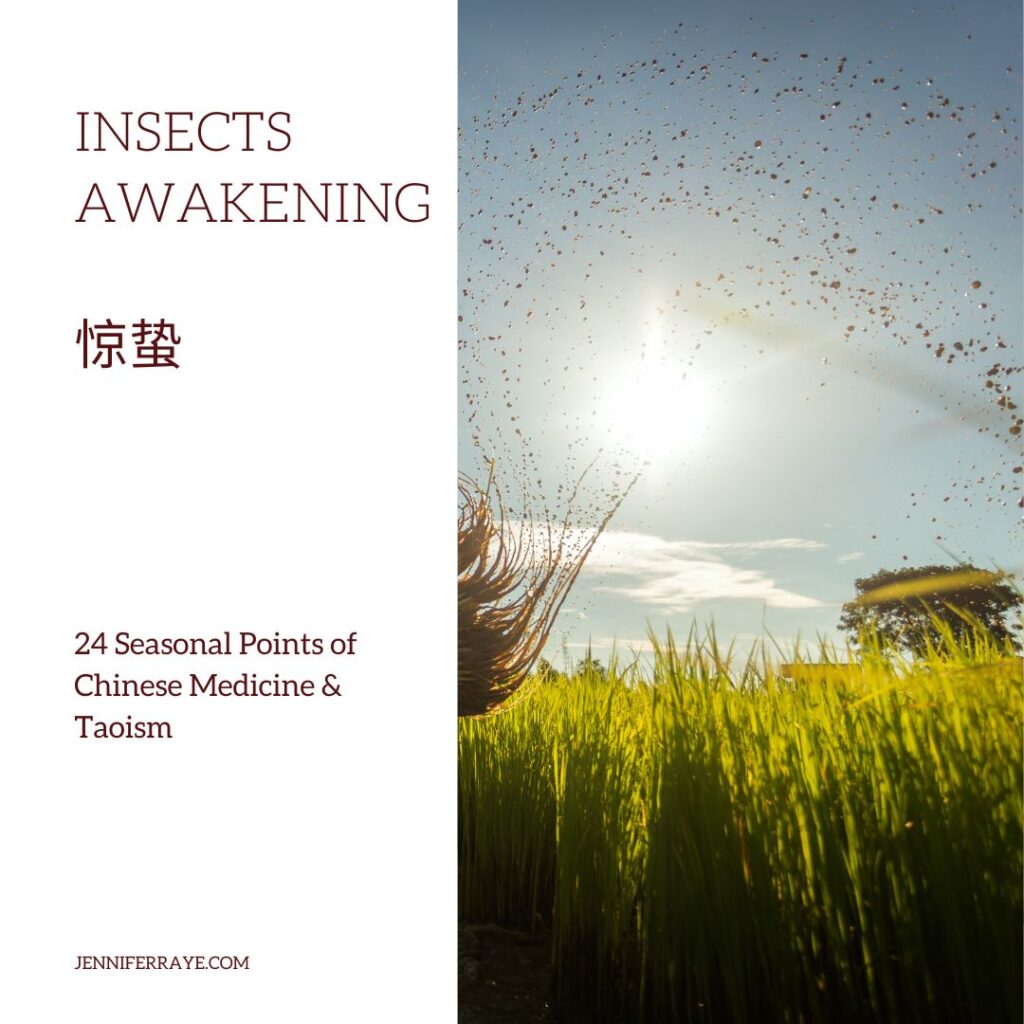
Insects Awakening – jīng zhé – 惊蛰 – Mar.5th – Mar.19th
This seasonal point represents the stirring of spring. The natural world is awakening from its winter slumber! As spring energy increases, spend more time outdoors and gradually add more aerobic activity, such as running and vigorous yoga, to your day. Spring energy builds gradually and can fluctuate. It requires both forward momentum and grounding, so most people will benefit this time of year by gradually increasing movement and vigorous exercise.

solar terms spring

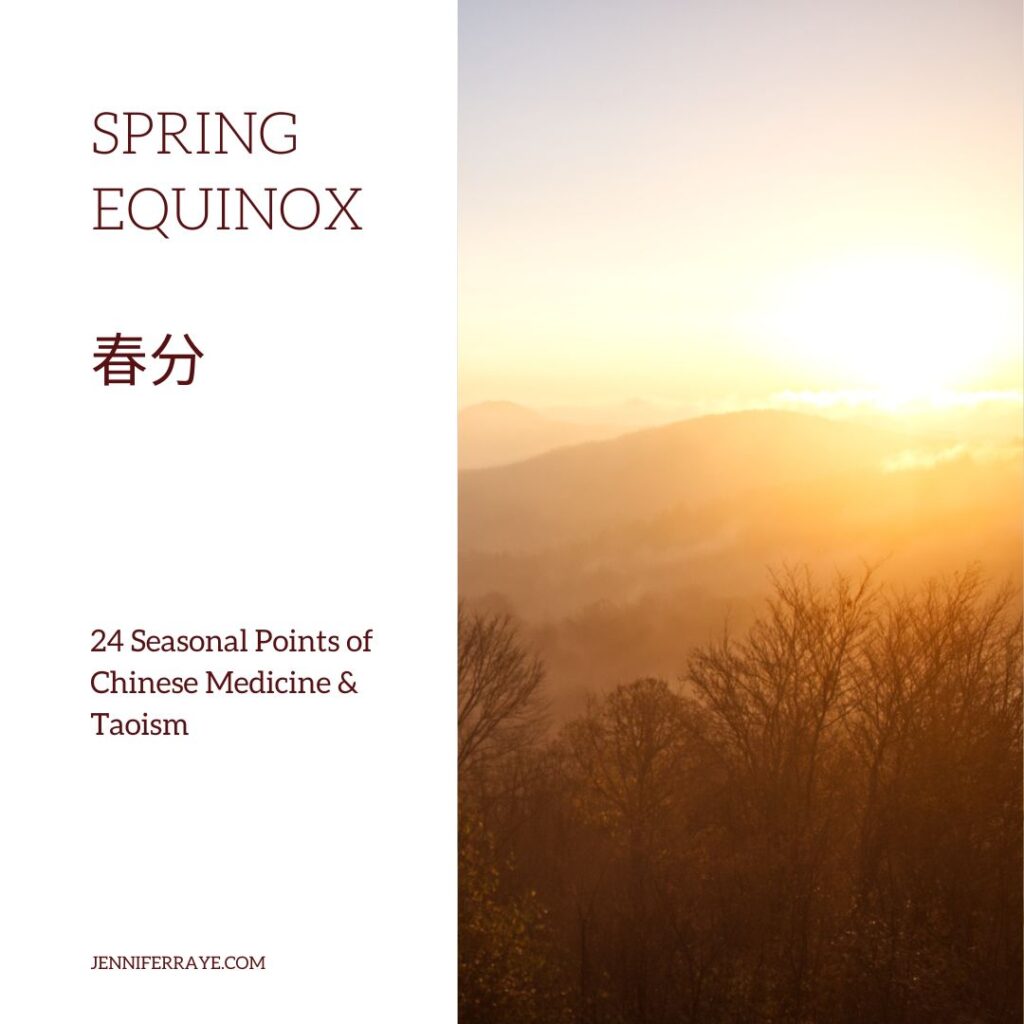
Spring Equinox – chūn fēn – 春分 – Mar.20th – April 4th
During this seasonal point, yin and yang are balanced. From now on, as the days grow longer, yang will grow, and yin will decline. The season’s energy supports us in shedding the old and outworn, and embracing new growth, clarity, vision, and direction. Consider what visions and dreams you’re nurturing and what you’re ready to create. Ask yourself: Where are you headed with purpose? The energetics of spring teach us to remain rooted and open while reaching for the light.

solar terms spring

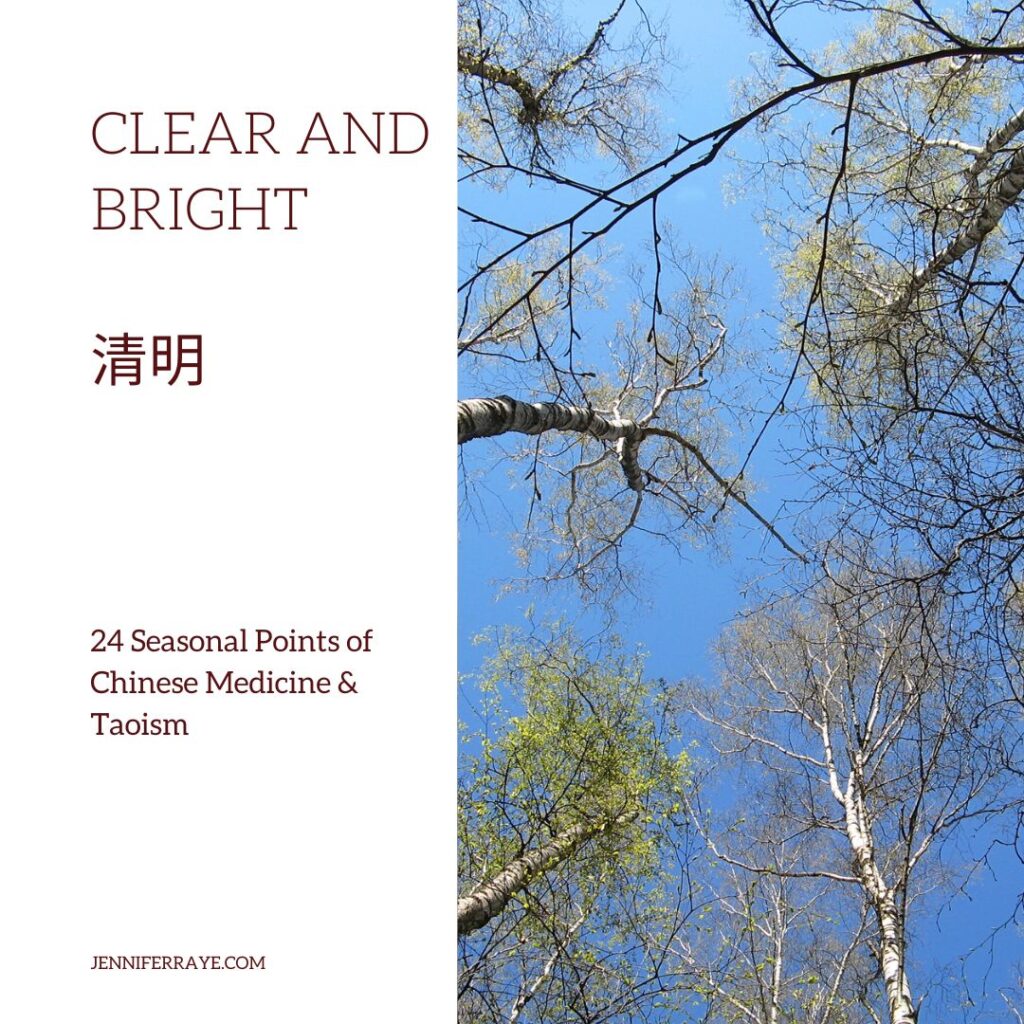
Clear and Bright – qīng míng 清明 – April 5th – April 19th
During spring, we’re moving from the slowness of the Kidneys and the water element to the growth and stirring of the wood element and the Liver/Gallbladder system. In Chinese medicine, the Liver organ is responsible for the smooth flow of Qi and Blood. People who tend to experience Liver Qi and Blood stagnation (chronic frustration, irritability, digestion issues, PMS, menstrual irregularity, pain, headaches) will want to be especially careful not to aggravate Liver Qi in the weeks ahead. Avoid congesting foods and make sure you express your emotions to facilitate the smooth flow of Liver Qi.

solar terms spring

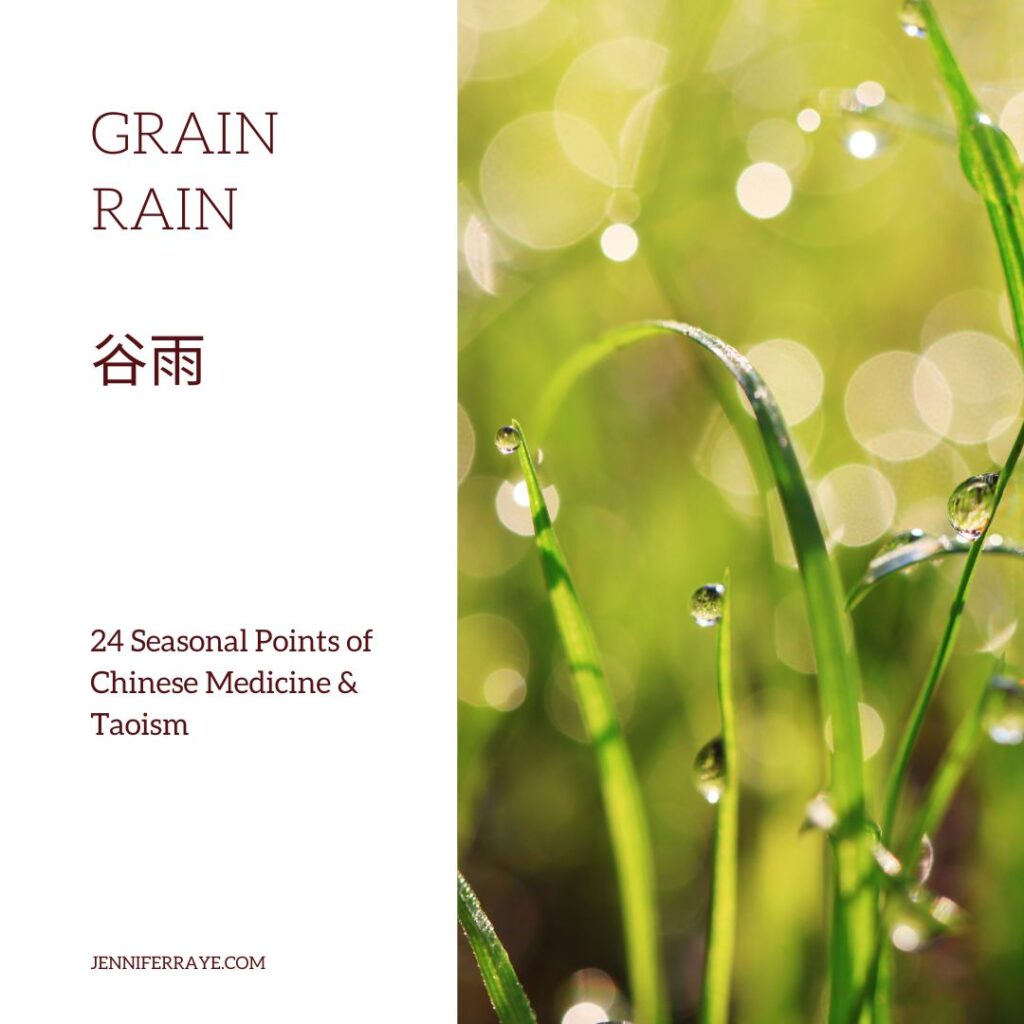
Grain Rain – gǔ yǔ – 谷雨 – April 20th – May 4th
The name for this seasonal point highlights how spring rains usually continue at this time, helping spur growth. Because of increased moisture (and accumulated heaviness from winter), dampness can be more prevalent this time of year. As spring emerges, we must break down and burn up the denser qualities accumulated over winter. When doing this, we can access spring’s clarity and vitality. If you feel heavy, damp, and cold this time of year, remember to stay active, circulate blood and Qi, and keep your body warm.

Seasonal Energetics for Spring Solar Terms

ELEMENT: Wood

ORGANS: Liver / Gallbladder

In Chinese Medicine, the Liver and Gallbladder are the organs that represent the lively energy of this season. The liver is a large organ located in the upper right abdomen, under the diaphragm and partially protected by the rib cage. It is a vital organ in the body, and with hundreds of functions, it supports almost every organ. The liver synthesizes amino acids and cholesterol and stores minerals, blood, and vitamins. It is also responsible for detoxification and the metabolism of carbohydrates, proteins, and fats. The small organ of the gallbladder sits just beneath the liver. It stores and secretes bile, which aids in digestion, particularly the breakdown of fats.

COOKING: During spring, use lighter, mildly warming fresh foods that are sweet and pungent. The sweet flavour helps support digestion, while the pungent flavour encourages upward and outward movement and disperses any heavy winter accumulation. Spring can still be cool and variable, so mildly warming foods help clear accumulated cold and dampness from winter while supporting digestive function.

Here are a few cooking tips for spring:

  • Keep eating warming foods and increase spring foods slowly.
  • Eat a little lighter and eat more foods that are gently cleansing. Near the end of spring, slowly increase salads and raw foods.
  • Eat simple, cooked whole foods. Add in root veggies, rice, and millet.
  • Add small amounts of bitter greens like dandelion, artichoke, celery, dark green leafy vegetables, chrysanthemum, kale, parsley, broccoli, bitter melon, or romaine lettuce.
  • Limit oily and congesting foods and alcohol.
  • Add in more foods that move Qi upwards and a little outwards to mimic the movement of Qi in the spring, like sprouts, chives, onions, daikon, and fennel. Sweet and aromatic foods also help Qi move upwards and towards the exterior.
  • Try these spices to support metabolic health.

SELF-CARE: Energy has been latent throughout the winter, buried deep in the earth, and now, as spring bursts forth, energy wants to move. During the spring, there is a gradual movement up and out. It’s a time when we move from a more internal focus to a more expansive one. Sometimes, this means there’s more physical energy available to start a new project or plan a new goal. In the spring, we can find clarity around our direction and vision, invite more creativity into our lives, and release stuck emotional patterns.

Here are a few ways to support yourself during the spring solar terms:

I hope this provides you with some valuable ideas for using the solar terms in conjunction with Chinese Medicine. Be sure to check out this page for information on all the solar terms. If you’re not already on my mailing list, you can sign up here for more posts like this one!

Chinese Medicine for Yoga Online Training

Chinese Medicine Food Therapy Online Course

Share This Post:

More To Explore

late summer seasonal points

Solar Terms or Seasonal Points for Late Summer and Autumn

Many earth-based wisdom systems recognize the need to participate with, rather than work against, the changing tides of the seasons. When we ...
Read More →
solar terms, TCM, winter

Solar Terms or Seasonal Points for Winter

Many earth-based wisdom systems recognize the need to participate with, rather than work against, the changing tides of the seasons. When we ...
Read More →
blog post how to build yin according to traditional chinese medicine jennifer raye

How to Build Yin (and why it’s so important!) According to Traditional Chinese Medicine

The holistic philosophy of Traditional Chinese Medicine teaches that we each need a balance of yin and yang for overall health and ...
Read More →
blog post boost qi with medicinal qi tonic porridge jennifer raye

Boost your Qi with Medicinal Qi Tonic Porridges

In Chinese Medicine, the body and mind function through the interaction of the “vital substances.” The vital substances are Qi, Blood (Xue), Essence (Jing), Spirit ...
Read More →
blog post acupressure for yin yoga jennifer raye

Acupressure for Yin Yoga

According to Traditional Chinese Medicine (and many other eastern healing arts), the body contains channels of Qi or prana. These channels are generally called meridians ...
Read More →
blog post yin yoga sequence for the liver gallbladder meridians jennifer raye

Yin Yoga Sequence for the Liver and Gallbladder Meridians

Traditional Chinese Medicine and the Liver and Gallbladder Within our yin yoga practice, we can practice sequences of poses that directly target specific areas of ...
Read More →
Scroll to Top