How to treat anxiety with Traditional Chinese Medicine
Did you know that acupuncture and Traditional Chinese Medicine (TCM) can help with anxiety and other emotional difficulties?
Anxiety is a normal response to stress or danger. But when this reaction occurs frequently, at inappropriate times, or chronically, it’s considered an imbalance.
Symptoms vary greatly depending on severity, and can happen suddenly or gradually. Additionally, those who experience anxiety are twice as likely to experience depression. Learn about how Chinese medicine views depression here.
Acupuncture has been clinically proven to calm the mind, improve sleep, ease tension in the body, and regulate neurotransmitters related to mood. Many patients find relief from anxiety and its accompanying symptoms with acupuncture, either on its own or in conjunction with lifestyle changes and Western medicine.
If you’ve been experiencing anxiety or other changes in your mood, be sure to check out the other resources on the site geared towards mental health. You can find those here.
According to Traditional Chinese Medicine (TCM), anxiety can be caused by multiple different energetic patterns. TCM diagnoses patients based on a complex theory that considers the specific symptoms an individual presents. So while a group of patients may all seek treatment for the Western disease “anxiety”, the TCM doctor will diagnose and subsequently treat each patient differently according to the presentation of symptoms.
While TCM doesn’t have an exact diagnostic equivalent to the Western diagnosis of “anxiety,” there are several conditions that closely correlate. According to TCM, a constitutional weakness can cause anxiety and stress, leading to either tension or depletion, irregularity in diet and lifestyle, or heavy blood loss (such as during childbirth).
Several common groupings for anxiety are seen in clinical practice. Take a look at the groups below to see where you fit. While this is not an exhaustive or detailed list, it should get you started. Keep in mind that self-diagnosis can be difficult, and treatment with the help of a practitioner is always best.
In all the cases below, symptoms such as palpitations, a racing heart, a feeling of worry or fear, and sleep disruptions are usually present. For ease of use, this list doesn’t contain detailed diagnostics, including pulse diagnosis, which is also an important indicator.
Organ Involvement
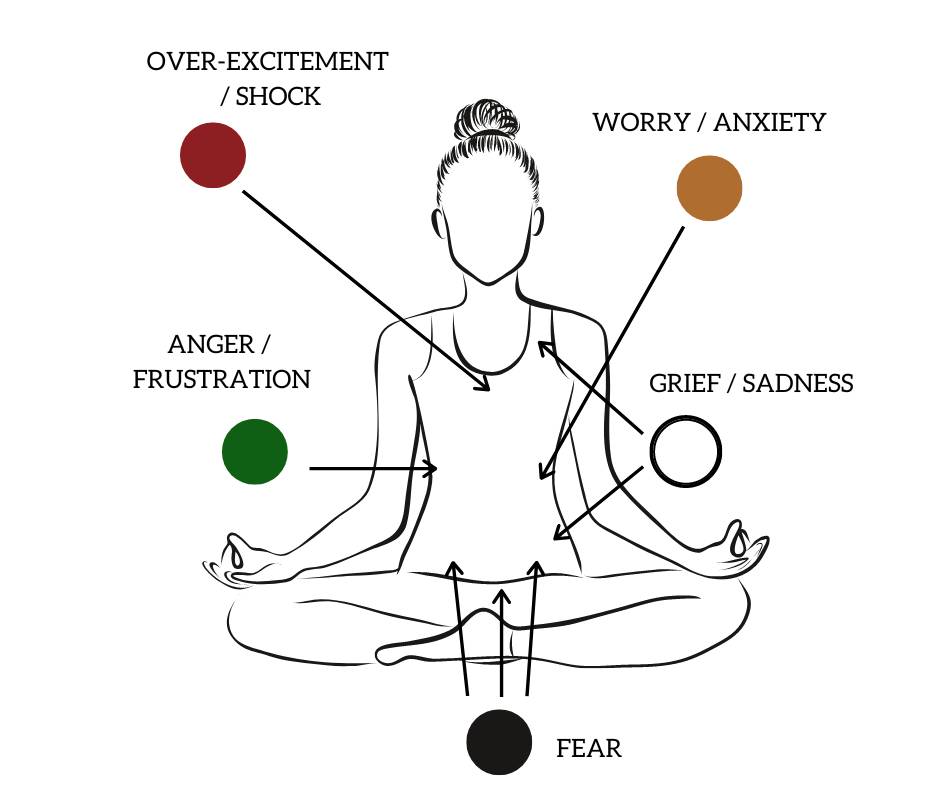
In TCM, anxiety and its accompanying symptoms are most often considered a disorder of the spirit because of their close connection to the energetic Heart system. However, other organ systems can also be involved.
In my experience, the Heart, Spleen, and Kidney are most often related to this condition.
When the Heart system is primarily involved, the patient may have a more ’emotional’ experience and symptoms in the chest, such as tightness and palpitations.
When the Spleen is involved, there is more thinking, worrying, repetitive thoughts and perhaps digestive disturbances.
When the Kidney is involved, there is a more profound sense of fear or fright.
Blood/Qi Deficiency
In Qi and Blood deficiency, there can be paleness (face and/or tongue) and a lack of energy. There may also be fatigue, memory loss, and dizziness. In these cases, it’s vital to build up energy reserves through adequate rest and regular, healthy meals. With blood deficiency, the diet should also include healthy sources of iron.
Yin/Yang Deficiency
With Yin deficiency, there is still depletion, but it manifests as heat. This person will be more restless, experience more anxiety in the evening, and may have night sweats and dryness. Yin-deficient type anxiety is seen more commonly in menopausal women. Especially in Yin deficiency, assessing what might be depleting the yin, such as staying up too late, sweating too much through hot yoga, or overworking, is important.
Yang deficiency is also a depletion. In this case, there is a lack of the warming quality of yang, so there will be a feeling of cold, cold hands and feet, and paleness.
Qi Stagnation
With any stagnation in the body, there is usually a sense of “stuckness”. This can manifest as a feeling of being unable to move forward in life, or as a sense of tension and built-up energy.
Depending on the organ involved, this person will experience a feeling of distention (sensation of pushing outward – similar to the feeling of bloating) in either the chest or abdomen, more sighing, and perhaps have a slight purple colour either on the lips or tongue.
Excess Heat and Phlegm
This is usually a more serious case in which excess heat and the accumulation of an energetic substance called “phlegm” obstruct the mind, causing erratic behaviour or hyperactivity. Dreams are heightened, and there can be the presence of physical phlegm in the throat, constipation, and a flushed face.
Rebellious Qi
Another less common and generally more serious expression of anxiety in Chinese Medicine is rebellious Qi causing ‘internal urgency”. This is most similar to a “panic attack” in Western medicine.
The sensation of movement or tightness beginning in the abdomen and radiating upward toward the heart indicates an involvement of a channel in the body called the “Chong”. A more detailed analysis of symptoms is required for full treatment of this manifestation.
Learn more about Chinese medicine for anxiety:
If you suffer from bouts of anxiety or depression, you may want to try acupuncture. I have a special interest in TCM psychology and have achieved many positive outcomes with clients. If you’d like to work with me using Chinese Medicine, check out courses and programs here.