Solar Terms or Seasonal Points for Late Summer and Autumn

late summer seasonal points

Many earth-based wisdom systems recognize the need to participate with, rather than work against, the changing tides of the seasons. When we live in harmony with seasonal change, we foster greater well-being.

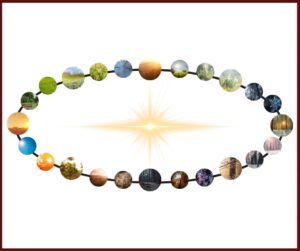
By observing the natural world, the ancient Chinese developed a calendar system with 24 seasonal points, based on the sun’s annual circular motion. Each period is approximately two weeks. You can think of these solar terms as mini-seasons.

Each solar term represents the unique weather pattern present at that time of year and is associated with specific traditions. Learn more about all of the solar terms here.

Solar terms or seasonal points reflect the climatic and environmental changes that occur as the seasons shift. Chinese Medicine (TCM) emphasizes the need to adapt our behaviour based on the external environment to maintain health and vitality and avoid disease. Therefore, we can use the solar terms as guideposts when harmonizing our diet and lifestyle choices to align with the natural world.
Solar Terms or Seasonal Points for Late Summer and Autumn

In today’s post, we’ll explore the seasonal points associated with autumn. Be sure to check out this post for general info on the seasonal points, and these posts for information on the solar terms of winter, spring, and summer.

solar terms of TCM, autumn

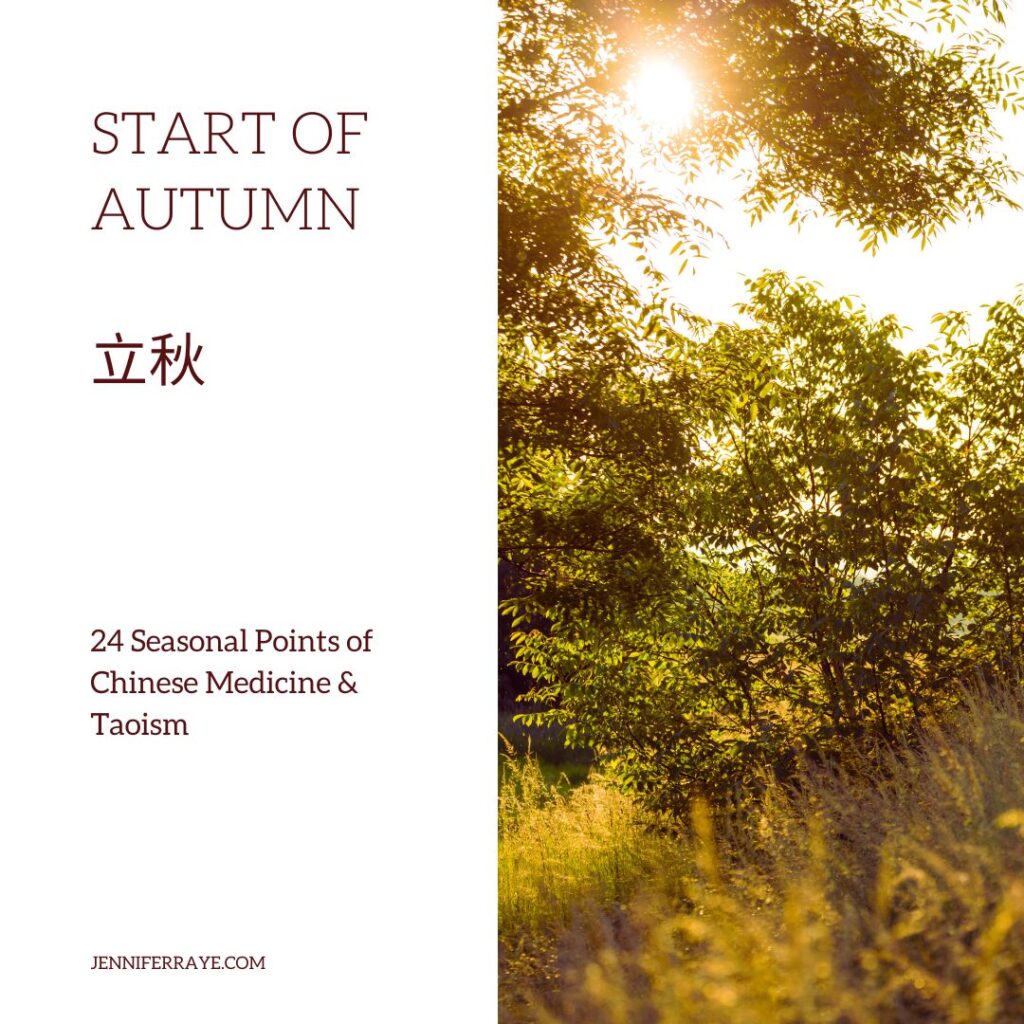
Beginning of Autumn 立秋 – Aug.7th – Aug.22nd

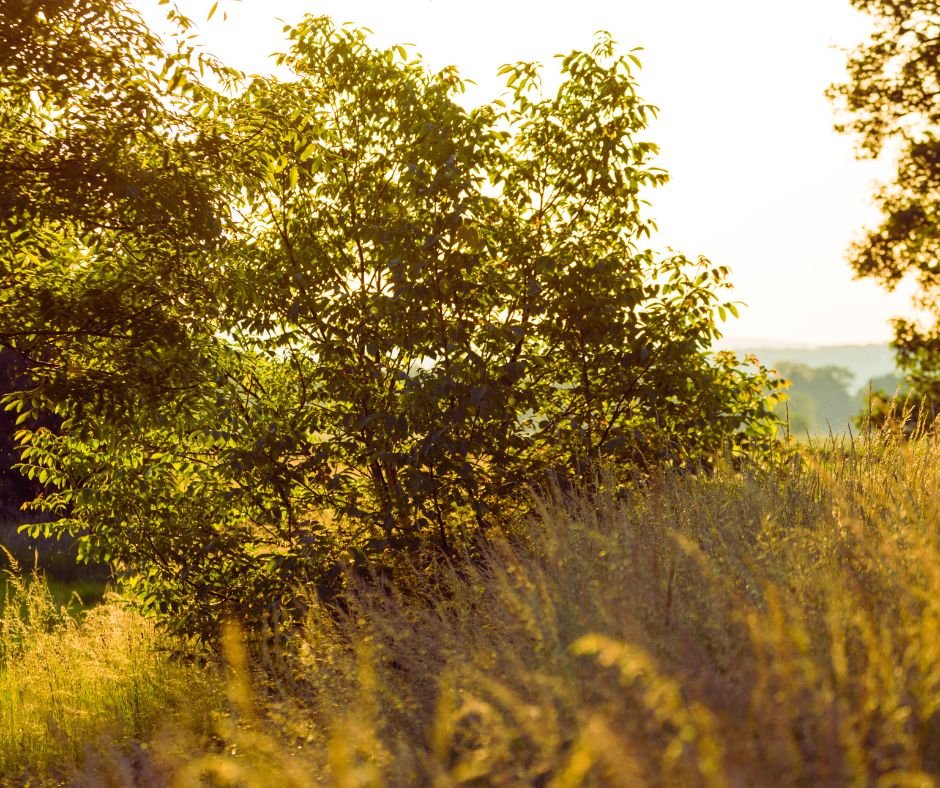
This seasonal juncture indicates a shift towards “late summer” in Chinese Medicine. Late summer is a brief period associated with the earth element—it comes just before the chill in the air and the onset of autumn. Time seems to slow down, and everything turns golden in late summer. Savour and enjoy every last moment.

solar terms of TCM, autumn

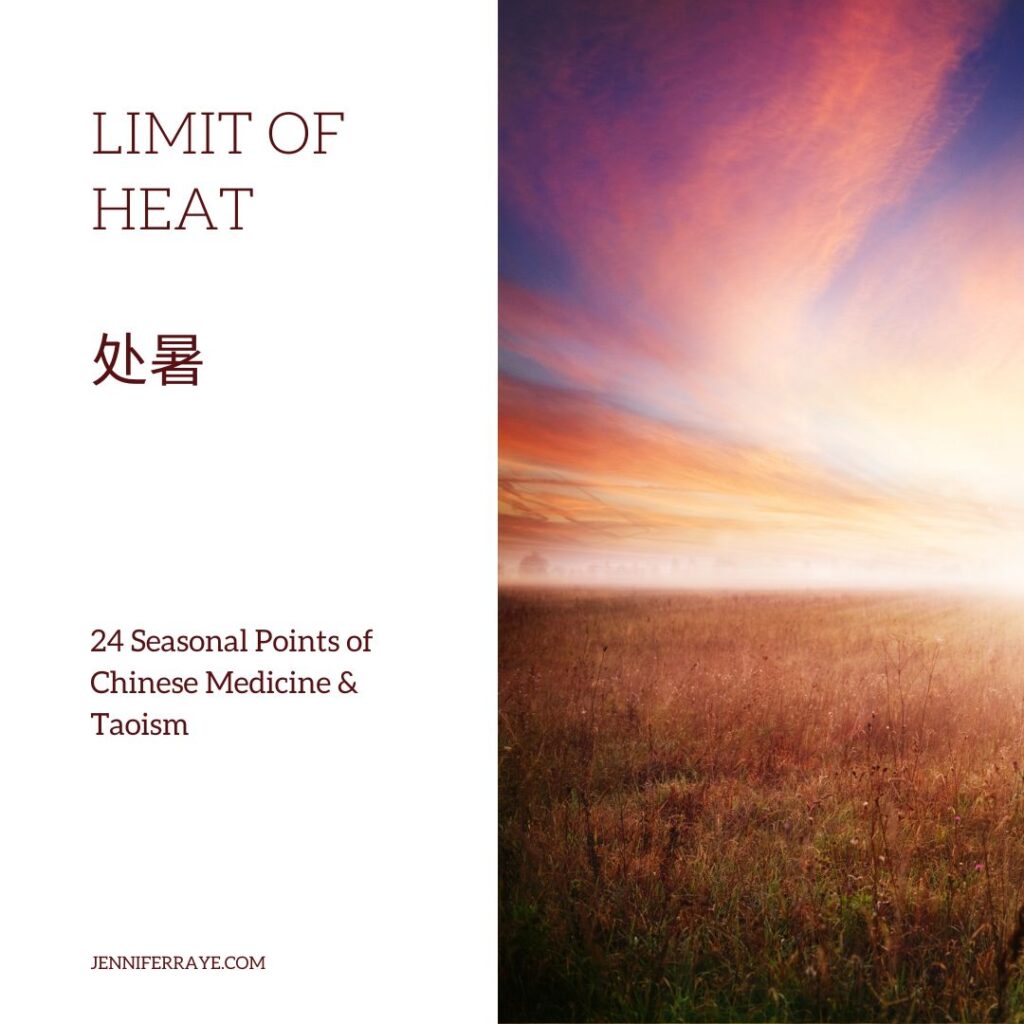
End of Heat 处暑 – Aug.23rd – Sept. 6th

“End of heat” is the first solar term of autumn. In autumn, energy moves from yang to yin, a cyclical movement called yin within yang. Temperatures cool during this solar term. Meanwhile, the earth offers her abundant bounty, such as squash ripening on vines, earthy aromas, and heavy seeds. Foods at this time should align with the season’s inward nature and be moistening to protect the body from the drying and cooling that are prevalent this time of year.

solar terms of TCM, autumn

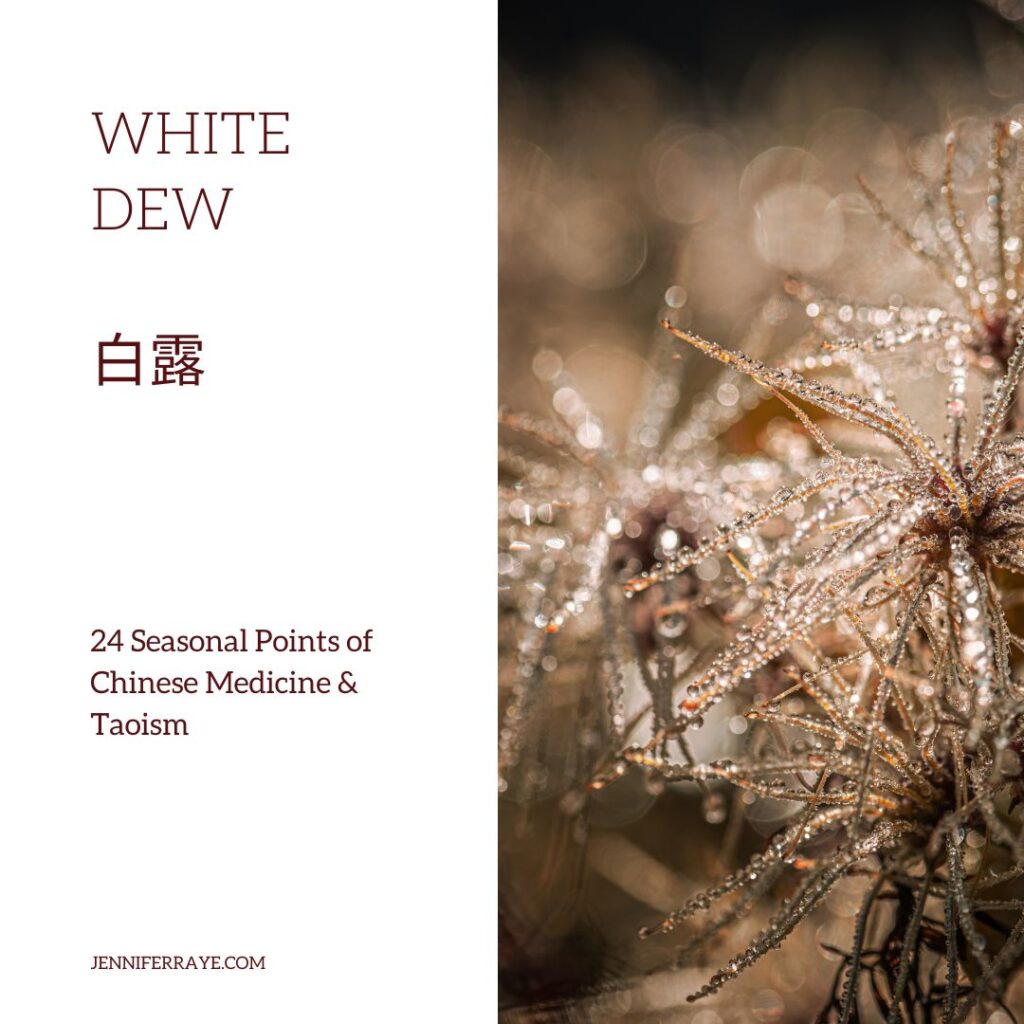
White Dew 白露 – Sept.7th – Sept.22nd

You may notice a chill in the air this time of year. We’re now descending into darkness, which is reflected in our bodies and minds (if we listen closely). Have you felt the natural shift to slow down and let go? Is there some way your body or mind is asking for release? Is there one way you can slow down this week that will help you access what you truly value? Remember that energy is shifting now, and this is your chance!

solar terms of TCM, autumn

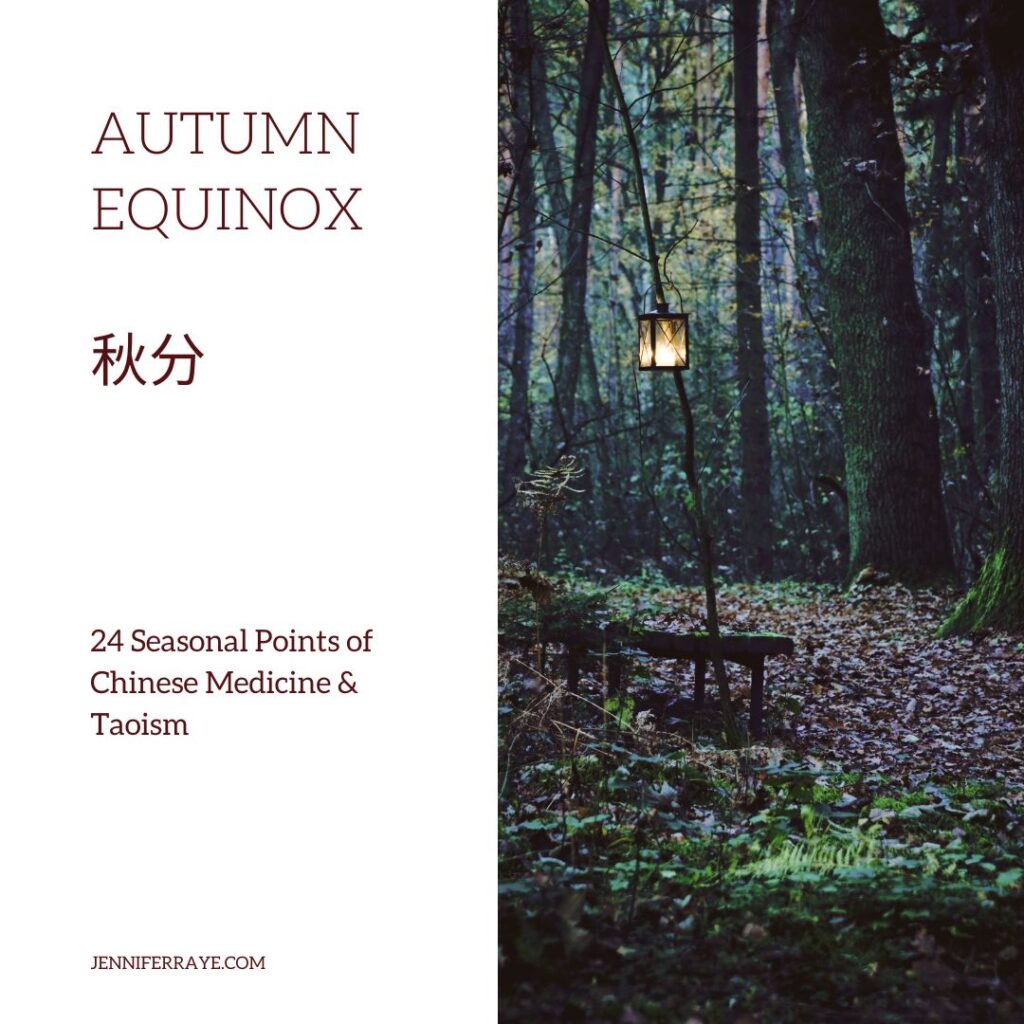
Autumnal Equinox 秋分 – Sept.23rd – Oct.7th

This solar term indicates the autumn equinox. We now begin our slow descent into darkness and decay. It’s a time to move towards our inner light—a season of slowness and soul, a moment for hibernation. In the cycle of the five elements, we are slowly transitioning from the metal element to the water element. This season, we can work with the boundaries between life and death.

solar terms of TCM, autumn

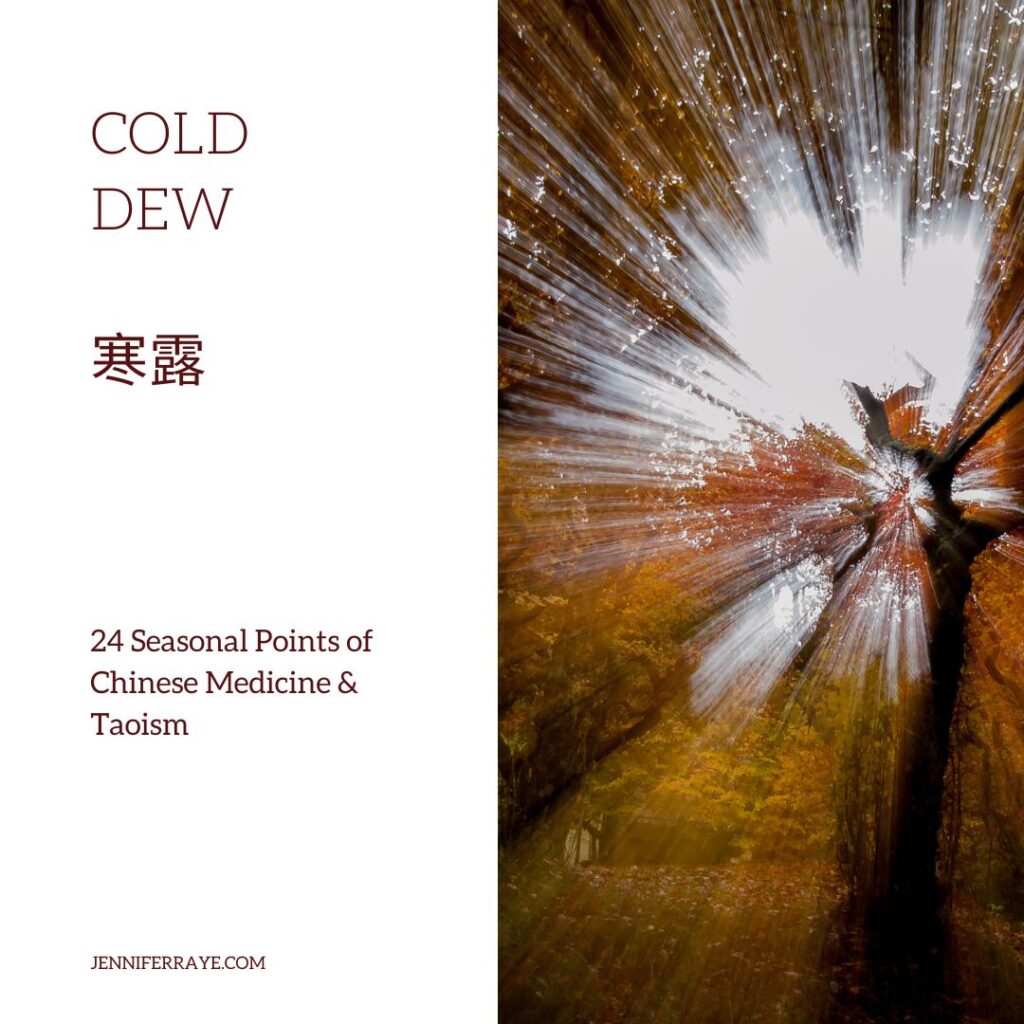
Cold Dew 寒露 – Oct.8th – Oct.22nd

This solar term reminds us to release and simplify our lives. As energy continues to cool, contract, and descend, you may desire to pare down and slow down. In Chinese medicine, the metal element represents autumn. The character for the Metal Element features the symbol for Earth in the center, with small flecks on either side representing precious metals, and a roof structure implying that it is underground. Our central task in the metal phase of the cycle is to cut away what is no longer needed, preserving what is truly precious. When we let go and simplify, we are better able to connect with what is valuable or what is buried or hidden.

solar terms of TCM, autumn

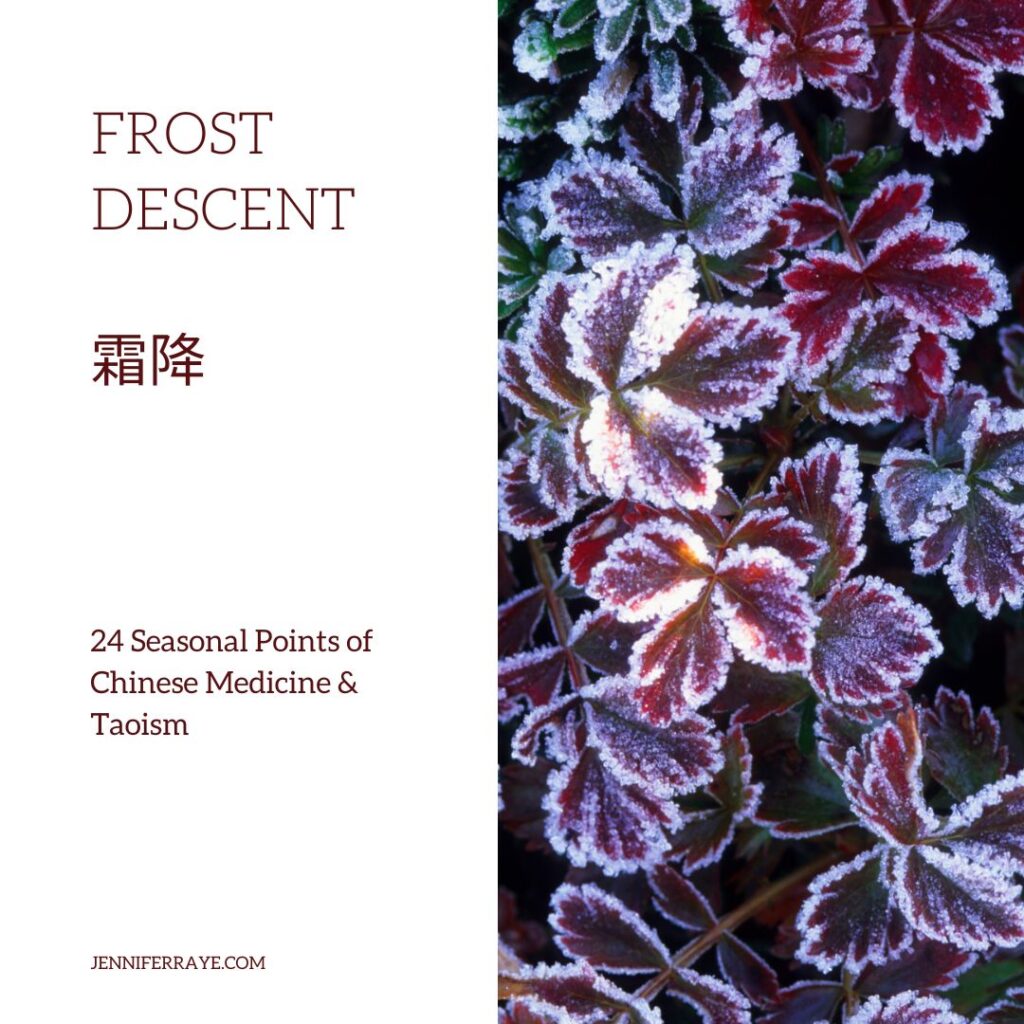
Frost Descent 霜降 – Oct.23rd – Nov.6th

In this stage, early mornings have a bite, the winter winds whisper, and we learn to offer up our final letting go. The end of the harvest is near (or has just passed), and now we are asked to stay close to the warmth of the fire and drop into a quieter time. In the Taoist cycle of time, darkness feeds life.  Last season is long gone, and this season is here for a time – how will we prepare for and participate in the darkness?

Seasonal Energetics for Autumn Solar Terms

ELEMENT: Metal

ORGANS: Lungs / Large Intestine

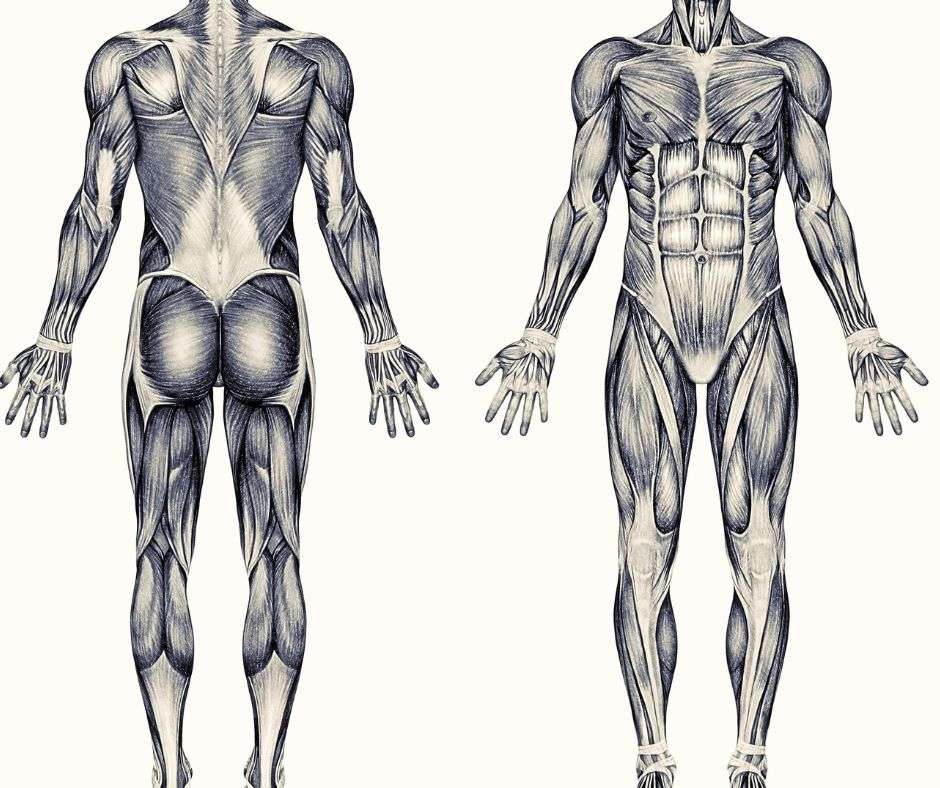
In Chinese Medicine, the Lungs and Large Intestine are the organs that represent the energy of this season.

The lungs are essential respiratory organs in the human body. They are responsible for the exchange of oxygen and carbon dioxide between the air we breathe and our bloodstream. The two lungs are located in the chest, on either side of the heart, above the diaphragm. The lungs have a complex structure that facilitates the crucial process of gas exchange.

The large intestine is the final part of the long and winding gastrointestinal tract and consists of four parts: the cecum, colon, rectum, and anal canal. It completes the digestive process, produces specific vitamins, and stores and excretes waste. It is also responsible for water absorption.

COOKING:

Foods at this time should align with the season’s inward nature and be moistening to protect the body from the drying and cooling that are prevalent in autumn. Autumn is also a good time to start preparing for winter, as foods become a little heavier and more nourishing during this season.

Here are a few cooking tips for autumn:

  • Add more hearty, warming and downward-moving foods like root vegetables, sweet potatoes, squash, oats, rice, carrots, radishes, turnips, nuts, seeds, and proteins.
  • Use moderate amounts of the sour flavour (also called astringent) to create an inward movement and a focus of the mind. Sour also protects the internal yin and stimulates the production of body fluids and saliva, which can dry up in autumn. Try sauerkraut, sourdough bread, yogurt, vinegar, grapefruit, lemons, olives, pickles, adzuki beans, and rose hip tea.
  • Eat moistening foods like soy, seaweed, eggs, dairy, sesame seeds, pears, and apples.
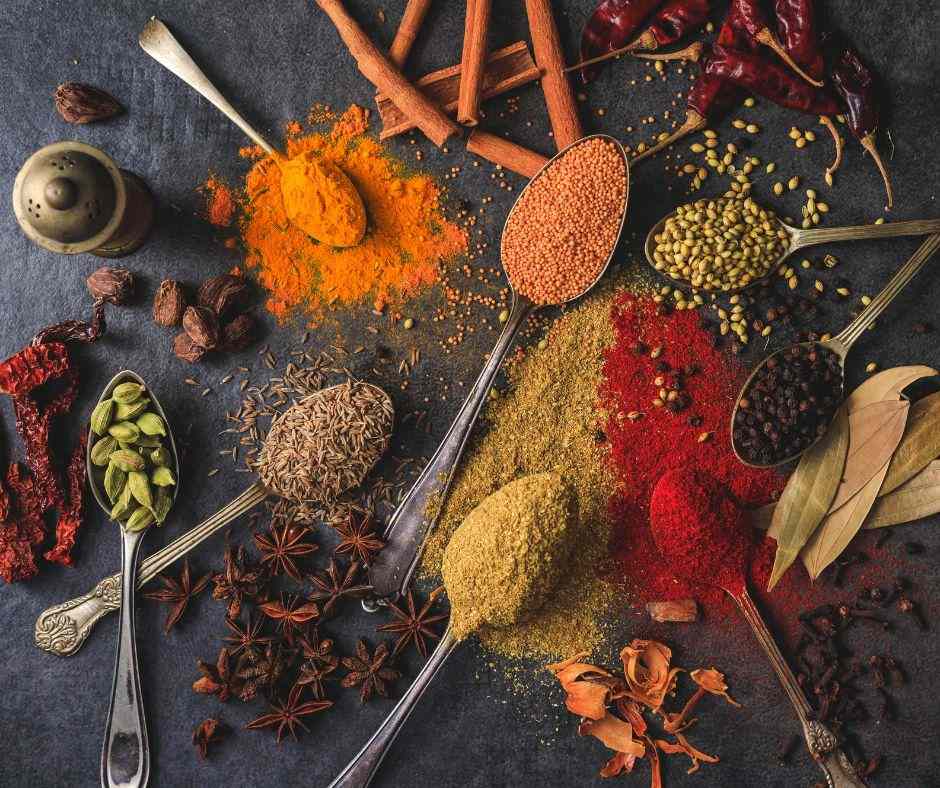
  • If the weather is cold or damp, add warming spices, foods, and aromatic herbs—chilli, cinnamon, garlic, ginger, and onions.

SELF-CARE: Autumn is the season of metal. On the great wheel of time, yin is now growing. It’s a time of letting go, contracting, and focusing. The season’s energy encourages us to hold close what is precious and release what has passed.

Here are a few ways to support yourself during the autumn solar terms:

I hope this provides you with some valuable ideas for using the solar terms in conjunction with Chinese Medicine. I’ve included all the seasonal terms for you here. To learn more about harmonizing with the seasons, check out my annual course, Living Seasons!

Chinese Medicine for Yoga Online Training

Chinese Medicine Food Therapy Online Course

Share This Post:

More To Explore

eat for spring with TCM and Ayurveda

Eat for Spring: Nourish Your Body with TCM and Ayurveda

As winter’s cold stillness gives way to spring’s vibrant energy, our bodies undergo a natural shift, mirroring the changes in nature. Traditional ...
Read More →
supporting summer seasonal recipes

Supporting Summer: Seasonal Recipes for the Fire Season

In Taoist philosophy and Chinese Medicine, yang reaches its fullest expression in summer. Energetically, summer is a time when we can shed ...
Read More →
blog post chinese medicine for anxiety jennifer raye

Can acupuncture and Chinese Medicine help anxiety?

How to treat anxiety with Traditional Chinese Medicine Did you know that acupuncture and Traditional Chinese Medicine (TCM) can help with anxiety and ...
Read More →
blog post herbal nutrition for your health jennifer raye

Easy herbal medicine to get more nutrition in your day

There are many health concerns that we can address through greater nourishment. Many natural remedies have such a positive effect on the body because they ...
Read More →

When the Heart Speaks: Emotions Through the Lens of Chinese Medicine

In Traditional Chinese Medicine (TCM), disease formation results from only a few causes, including emotions. Whereas Western physiology attributes emotions and mental health to the ...
Read More →
blog post yoga practice for kidney qi jennifer raye

Yoga Practice for Kidney Qi

Yoga Sequence to Support Kidney Qi In Chinese Medicine, the Kidneys are paired with the Urinary Bladder and are associated with the water element. The ...
Read More →
Scroll to Top