Yin Yoga Sphinx Pose
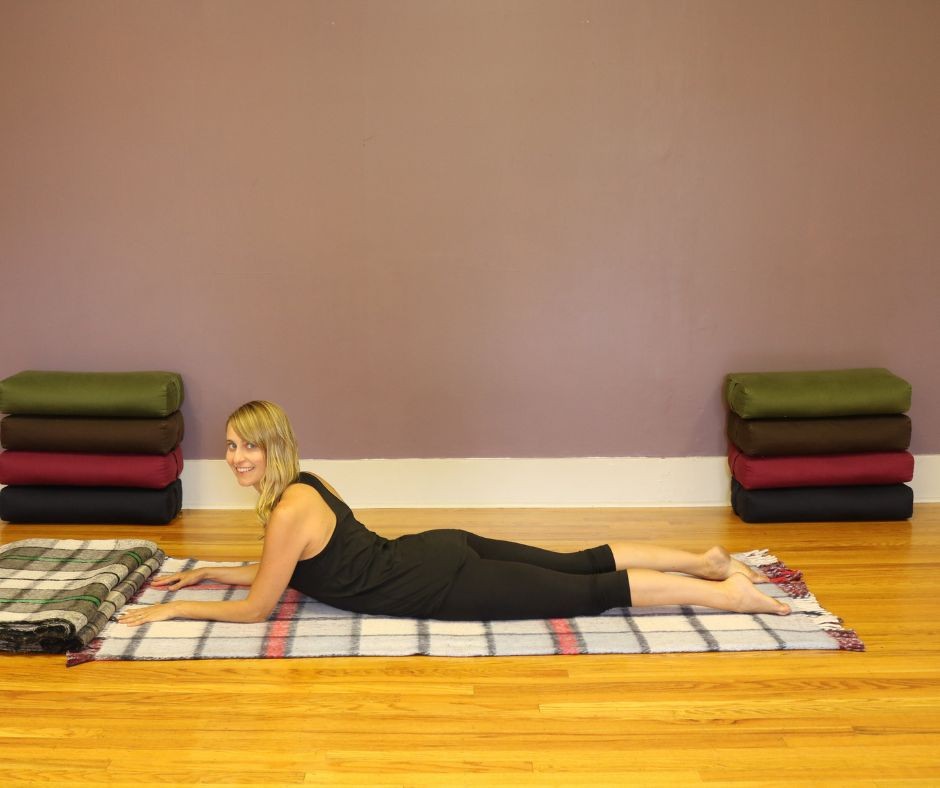
Sphinx pose is a backbend that helps open the front of the body and compresses the lower spine, sacrum, and the kidney and adrenal regions. It also activates the Kidney meridian and the ligaments along the spine. This is particularly important because of its connection to the Qi reserve in this area.
Remember, this can be a deep pose. If you have a history of lower back fragility, go very slowly. And if you experience any pain, slowly come out of the posture. You can also experiment with engaging the inner thighs and outer buttocks and pressing the pubic bone down to create more stability and support. You can also lower down onto your lower ribs for a smaller backbend.
To release rest on your belly and then push up with an exhale and rest back in child’s pose or move to your next yin yoga posture.
Yin Yoga Seal Pose
Seal pose is a deeper back bend and may not be available for everyone. Take your time. This posture not only pressurizes the spine and kidney meridian but also opens the upper chest, strengthens the arm bones, and provides a stretch along the front of the body, where the Spleen and Stomach meridians run. This variation is also safe to practice while pregnant.
With your arms straight and wider than your torso, walk your hands back until they are a few inches in front of your shoulders. Remember to protect hypermobile elbows by creating a micro-bend and maintaining equal weight distribution across your hands and wrists.
If you feel you need extra stability in the low back in this posture, you can engage the legs and glutes as described in the above sphinx posture. You can also alternate the contracting and releasing of your buttocks and legs in this posture.
To release, lie on your belly, or drag your foot and knee up towards your head while keeping them on the floor for a deeper release. Child’s pose and/or cat/cow pose are also nice counter poses.