
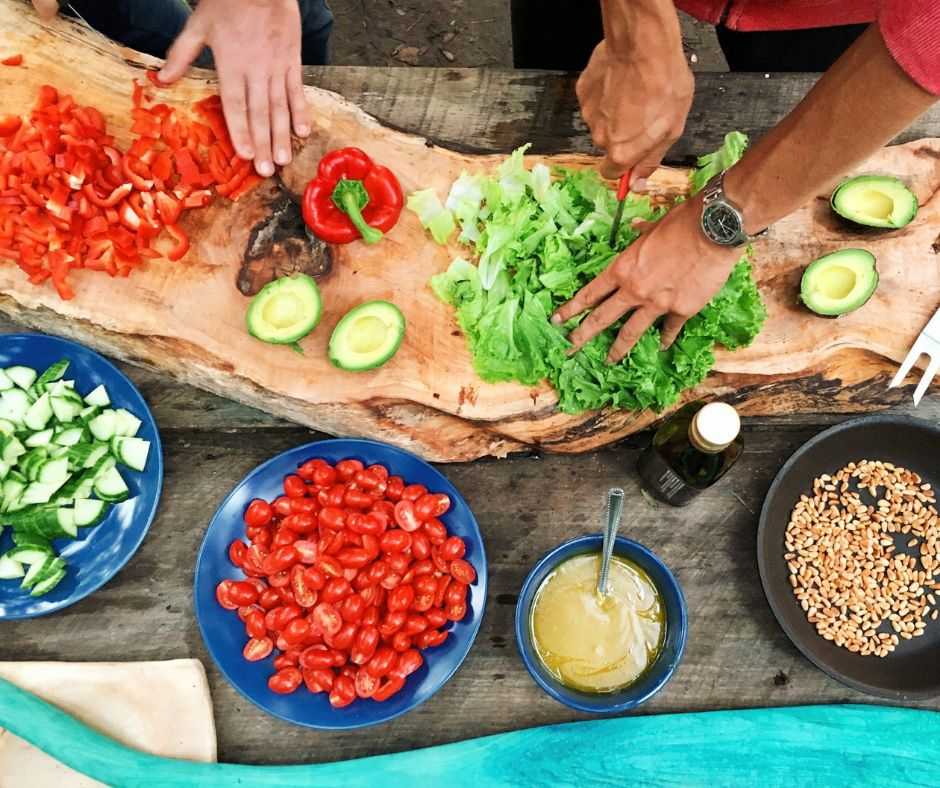
As the seasons change, more local produce becomes available, and that means more salads. I love adding more salads to my diet during spring and summer. The combinations of salad ingredients are virtually endless, and it’s easy to eat a unique and delicious salad every day.
Making your own salad dressings is easy! Let your creative juices flow….
Some Guidelines: One part acid (ex., lime, lemon, vinegar, orange, grapefruit) for every three parts oil (olive, coconut, sesame, etc). Remember to dry greens thoroughly after washing for perfect salads every time.
Here are some simple salad dressing recipes to spice up all those summer salads. Enjoy!
Creamy Tahini Salad Dressing
- 3 tbs sesame tahini
- 1 tbs lemon juice/apple cider vinegar
- 1/2 cup water (go slow until desired consistency)
- 1 tsp. olive oil
- 1 minced garlic clove
Mix together and voila.
Strawberry Salad Dressing:
I made this recently and couldn’t believe how yummy it was!!
- 12 strawberries
- 8 tbsp coconut oil
- 8-10 tbsp water
- 2 tbsp sesame oil
- 2 tbsp apple cider vinegar
- 2 tsp lime
- 1 tsp maple syrup
- 2 tsp sea salt
Blend it all together and pour liberally!
Curry Salad Dressing:
- 1 cup flax oil
- 1/3 cup raw organic apple cider vinegar
- 2 cloves garlic – finely chopped
- 3 tsp. curry powder
- 1/2 tsp. sea salt
Combine the above ingredients in a jar and shake thoroughly.
I like this dressing over a salad of fresh lettuce greens, roasted eggplant cubes, orange sections and cashews.
The Spicy and Fresh
- 1 cup flax oil
- 1/3 cup raw organic apple cider vinegar
- 1 tsp. sea salt
- 2 cloves minced garlic
- 1/2 tsp. cayenne
- 2 Tbsp. fresh chopped dill
- 2 Tbsp. fresh chopped oregano
Mix all ingredients in a mason jar and shake. Let it stand for 2 hours in the fridge before shaking again and using.
This dressing is great with a salad of arugula, walnuts, and tomato wedges.
Creamy Avocado Dressing
- 1 avocado
- 2 Tbsp. fresh lemon juice
- up to a 1/4 cup water to thin
- 4 Tbsp. organic olive oil
- 3 Tbsp. sesame oil
- 2 Tbsp. chives or green onions chopped
- 2 Tbsp. chopped fresh parsley
- sea salt to taste
Blend in a food processor, chill, and serve.
I’ve been tossing this dressing with diced zucchini and grape tomatoes. Then I put that mixture over a bed of baby power greens like kale, spinach, and chard, and top it with pumpkin seeds or feta. Yum!